
Most SaaS teams don’t struggle with building backlinks because they lack effort. They struggle because most of what they try doesn’t move the needle in a meaningful way. A few mentions here and there, some low-quality directories, maybe a guest post or two that never really brings long-term value. The result is usually the same: traffic stays flat, and domain authority barely changes.
What makes SaaS link building tricky is getting the right links from places that actually strengthen your credibility in the eyes of search engines and real users.
Here are 9 practical SaaS link building strategies that actually help improve Domain Rating.
#1: Product-Led Content That Naturally Earns Links
Most SaaS companies try to create “content for backlinks” instead of content that actually deserves them. That’s usually where things go wrong. Product-led content works differently because it starts with something real your product already does, then builds useful content around it.
Instead of writing broad topics like “What is project management software,” you go deeper into things your users actually care about. For example, how to reduce onboarding time, how teams are using your feature to save hours, or even simple breakdowns of workflows your product improves. This kind of content doesn’t feel forced. It feels practical, and that’s what makes people reference it in their own articles.
But connect your product to real problems, not just keywords. When the content solves something clearly, other blogs, newsletters, and communities are more likely to link to it without you even asking.
#2: High-Intent Guest Posting On SaaS And Tech Blogs
Guest posting works when it’s done with intent. Most people fail here because they treat it like link placement instead of relationship building. SaaS guest posting should feel like you’re adding something useful to another audience.
The best results come from SaaS blogs, startup publications, and niche tech sites where your target users already spend time. So focus on things like lessons from scaling a SaaS product, real mistakes in onboarding users, or breakdowns of workflows your team improved.
Editors can easily spot content written just for links. What works better is writing like you’re sharing something you’ve actually seen inside your product or company. Even simple experiences are enough if they’re useful.
When your guest posts are genuinely helpful, they do two things at once — they bring referral traffic and also earn stronger backlinks that support your Domain Rating over time.
#3: Digital PR And Expert Mentions (Including HARO)
Digital PR works because it puts your brand in front of real journalists who are already writing stories your SaaS can fit into. Instead of chasing links directly, you’re earning them by being part of something newsworthy or useful.
What makes this strategy powerful is that it’s not just theory. It’s widely used because it consistently delivers results at scale. In recent industry research, 48.6% of SEO professionals say digital PR is the most effective link building tactic, ranking it ahead of guest posting and other outreach methods.
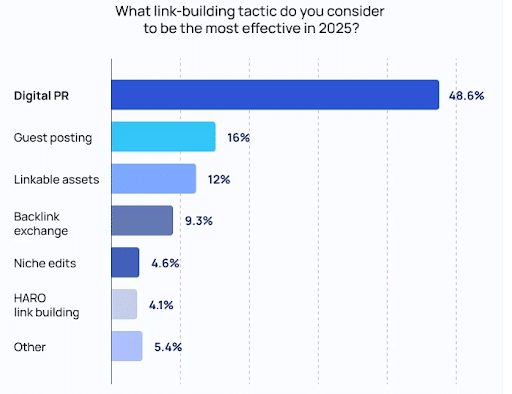
Source: BuzzStream
That’s a strong signal that this isn’t just a trend—it’s becoming the default for high-quality link building.
Platforms like HARO-style requests, journalist queries, and industry roundups are where this plays out. The idea is simple — you respond with clear, real opinions or short insights from your experience.
The strongest responses usually come from founders, product leads, or marketers who’ve actually dealt with the problem being discussed.
For example, if someone is writing about SaaS growth challenges, a short, honest insight about what worked (or didn’t) in your case is enough to get featured. These mentions often come from high-authority publications, which makes them especially valuable for Domain Rating.
#4: Data-Driven Studies And Original Research
If there’s one type of content that keeps earning links without constant outreach, it’s original data. Most SaaS blogs write opinions. Very few publish anything backed by real numbers, and that gap is exactly where backlinks come from.
You don’t need a huge research team for this. Even simple things like analyzing your product usage data, running a small survey with users, or breaking down trends you already see inside your SaaS can turn into link-worthy content. The key is to present something that others in your space don’t already have.
For example, instead of writing “best practices for onboarding,” you could publish something like “What 500 SaaS onboarding flows revealed about user drop-off.” That kind of angle gives other writers a reason to cite you instead of repeating generic advice.
This works because publishers, bloggers, and even journalists prefer referencing data over opinions. It saves them time and makes their content stronger. Once your research starts getting picked up, it can continue earning links for months without additional effort.
#5: Free Tools And Micro SaaS Link Bait
Free tools are one of the most reliable ways to earn backlinks in SaaS because they solve a problem instantly. People don’t just read them — they use them, share them, and reference them in their own content.
You don’t need to build something complex. A simple calculator, generator, audit tool, or even a small utility tied to your SaaS niche can be enough. The goal is usefulness.
For example, if your SaaS is in SEO, a keyword difficulty checker or content scoring tool can attract consistent links. If it’s in finance, a small ROI calculator can do the same. Once these tools are live, they often start getting backlinks naturally from blogs, forums, and resource pages.
The reason this works so well is that people prefer linking to tools over explaining concepts themselves. It saves effort and adds value to their readers.
Unlike blog posts that lose traction over time, tools stay relevant longer. As more people discover them, they keep generating backlinks without constant promotion. That long-term link flow is what makes them powerful for improving Domain Rating steadily.
#6: Competitor Backlink Replication (Reverse Engineering)
Most SaaS companies try to “guess” where to build links. A smarter approach is to study what already works for competitors and simply replicate the patterns.
Start by looking at who is linking to similar SaaS products in your space. You’ll usually find a mix of blog mentions, resource pages, directories, and niche articles. These are not random — they’re proven link sources that already accept content in your category.
The goal is to identify repeatable opportunities. If three competitors are getting links from the same type of blog or industry list, there’s a good chance you can target the same sources with a relevant pitch or better resource. This method saves a lot of trial and error.
#7: Strategic Partnerships And Integration Links
One of the most underrated ways SaaS companies build strong backlinks is through partnerships that already exist in their ecosystem. If your product connects with other tools, you’re sitting on a steady source of relevant links that most teams don’t fully use.
Think about integrations, co-marketing pages, and partner listings. When your SaaS integrates with another platform, there’s usually a partner directory or announcement page involved. These pages often live on strong domains and carry real SEO value because they’re not created for links — they exist to support actual product usage.
You can also go beyond integrations. Simple collaborations like webinars, joint guides, or shared resources can naturally lead to backlinks from both sides. The key is that it should feel like a real partnership, not a link exchange.
What makes this strategy effective is relevance. These aren’t random backlinks. They come from companies in the same ecosystem, which makes them stronger in the eyes of search engines.
#8: Community And Forum-Based Authority Building
Most SaaS founders ignore communities because they don’t see immediate SEO value. But platforms like Reddit, Indie Hackers, niche Slack groups, and even Quora can quietly build authority links when used correctly.
The mistake people make is dropping links too early. That rarely works. What actually builds traction is participation first. Answering questions, sharing real experience, and contributing useful insights without pushing your product.
Once you’ve built some trust in a community, you can naturally reference your content or tools when it actually helps the conversation. That’s where links start happening in a more organic way.
These links may not always be high DR at first, but they often lead to secondary benefits — traffic, brand searches, and even mentions in blogs that pick up discussions from these platforms.
#9: Broken Link Building In SaaS Niches
Broken link building still works in SaaS because there are constantly outdated resources floating around. Old tools shut down, blog posts get removed, and guides stop being updated—but the links pointing to them still exist.
This creates an opportunity. You find pages in your niche that link to broken or outdated SaaS resources, then offer your content as a replacement.
The process is simple but effective. First, identify resource pages, blogs, or listicles in your industry. Then check for dead links using SEO tools. Once you find them, reach out with a quick, helpful message pointing out the broken link and suggesting your relevant page or tool as a replacement.
What makes this strategy work is timing and relevance. You’re not asking for a favor—you’re helping them fix something on their site. That’s why response rates are usually better than cold outreach.
Final Thoughts
SaaS link building is not about collecting as many backlinks as possible. It is about getting links that actually make sense for your product and help your site grow in a steady way.
Each strategy we covered plays a different role. Some bring faster results, like digital PR and guest posts. Some take more time, like tools, data studies, and competitor research, but they keep bringing links long after they are published. Others, like partnerships and community work, help you build trust and visibility in the background.
Nothing here works on its own. Real growth happens when you mix a few of these approaches and stay consistent with them instead of jumping from one tactic to another.
FAQs
1. What is SaaS link building?
SaaS link building is the process of getting backlinks to a SaaS website from other sites. These links help improve search rankings, build trust, and increase organic traffic over time when they come from relevant and high-quality sources.
2. Why is Domain Rating important for SaaS?
Domain Rating shows how strong your website’s backlink profile is. For SaaS companies, a higher DR often helps pages rank faster, brings more organic leads, and builds credibility in a crowded market where trust plays a big role.
3. Which SaaS link building strategy works fastest?
Digital PR and guest posting usually bring the fastest results. They can earn backlinks within weeks if your pitch is strong and your content fits the publisher’s audience. However, consistency is still needed for long-term growth.
4. Do free tools really help in link building?
Yes, free tools can attract backlinks naturally because people use and share them. When a tool solves a real problem, bloggers and websites often link to it as a resource, which helps improve Domain Rating over time without constant outreach.
5. How long does it take to improve Domain Rating?
Improving Domain Rating depends on link quality and consistency. In most SaaS cases, you may start seeing changes in a few months, but stronger results usually come with steady link building over a longer period, not overnight efforts.