Most outreach emails don’t fail because people hate link building. They fail because they feel like they were sent to 100 other people five minutes ago.
You’ve probably seen it yourself. A random email lands in your inbox asking for a link, with no real reason why you should care. No context, no effort, no value. Just a quiet assumption that you’ll say yes. That’s exactly why most of these emails get ignored.
Link building today works very differently. People are more selective with what they link to, and their inbox is already crowded. If your message doesn’t feel relevant within a few seconds, it’s gone.
So let’s get into link building outreach strategies that are actually working right now.
1. Hyper-Personalized Outreach (Beyond First Name)
Most outreach emails look personalized on the surface, but fall apart the moment you actually read them. Adding someone’s name or mentioning their website doesn’t show effort. It shows you know how to use a template.
Real personalization comes from context. It starts when you actually spend a few minutes going through their content and understanding what they’ve already said, what they’ve missed, and where your input fits naturally. When you reach out, your message should make it obvious that you’re responding to something specific, not just sending another request.
For example, instead of opening with a generic compliment, you can reference a particular section and build on it. Maybe they explained a concept well but didn’t include a practical example. Maybe a part of the article feels outdated. When you point that out in a respectful way and add something useful, your email immediately stands out.
The goal here isn’t to impress them with length or complexity. It’s to show relevance. Even one sharp, specific observation can do more than a long, generic email. If you’re doing outreach at scale, keep a simple system where you note one meaningful insight per page before reaching out. That alone puts you ahead of most people doing link building today.
2. Value-First Pitching (Give Before You Ask)
The fastest way to get ignored is to make your ask the center of the email. When someone opens your message and immediately sees a request for a link, they have no reason to continue reading. You haven’t given them anything to work with.
A better approach is to lead with value and let the link come in naturally. This means you look at their content first and find a way to improve it before you even think about your own goal. It could be a missing angle, a weak section that needs clarity, or an opportunity to add something more current.
When you frame your outreach around improving their content, the dynamic shifts. You’re no longer asking for a favor. You’re contributing something useful. The link becomes a supporting element, not the main task. That’s what makes it easier for them to say yes.
This approach works because it aligns with how content owners think. They care about keeping their articles relevant, helpful, and up to date. If your message helps them do that with minimal effort, you’re solving a problem for them. And when people see clear value with little friction, they’re far more open to adding your link.
3. Guest Posting with a Unique Angle
Guest posting still brings results, but the bar is higher now. Editors see the same kind of pitches every day, and most of them sound identical. Broad topics, vague ideas, and nothing that actually adds something new to their site.
If you want your pitch to stand out, the angle matters more than the topic itself. Instead of thinking about what you want to write, focus on what their blog is missing. Go through their recent posts and look for patterns. You’ll often notice repeated ideas, surface-level coverage, or gaps they haven’t explored yet.
Once you spot that, your pitch becomes much stronger. Instead of sending a generic idea, you can suggest specific headlines that clearly show the direction and value of the piece. This makes it easier for the editor to say yes because they can immediately see how it fits into their content.
Data shows that around 60% of companies publish between one to five guest posts every month.
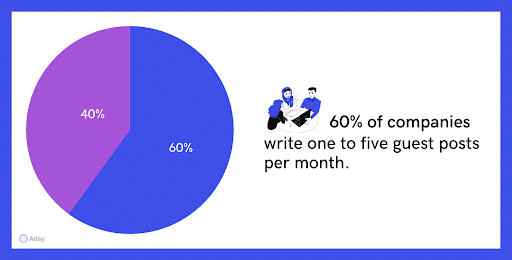
Source: Adsy
That consistency exists because guest posting doesn’t just help with links, it keeps brands visible in front of the right audience and builds authority over time.
4. Broken Link Building
Sending a generic “you have a broken link, here’s mine” email rarely gets a response anymore. Site owners have seen that template too many times.
What works now is context and effort.
Start by finding broken links on pages that are actually relevant to your content. Then look at what the original link was supposed to offer. Was it a guide, a study, a tool? Your replacement should match that intent or improve on it. If your content doesn’t feel like a natural replacement, it won’t get added.
When you reach out, don’t make it about your link. Keep the focus on helping them fix something on their page. Mention where the broken link is and why it might affect their reader’s experience. Then casually suggest your resource as one possible replacement.
This approach works because it removes friction. You’re not asking them to go out of their way. You’re helping them fix something that’s already broken while offering a ready solution.
5. Link Insertions (Niche Edits) with Context Matching
Link insertions work well because you’re placing your link into content that already has authority and traffic. But the success of this strategy depends entirely on how well your link fits.
Most people get this wrong. They find a page, see a keyword match, and assume it’s enough. It’s not.
What actually matters is context. Your link should feel like it belongs in that exact paragraph. The surrounding content, the anchor text, and the intent of the section should all align with what your page offers. If it feels forced, it won’t get accepted or worse, it gets removed later.
When reaching out, position your suggestion as a small content improvement. Point out where your resource adds depth or clarity. Keep your message simple and focused on that one addition.
Also, avoid sounding transactional. The moment your email feels like a deal or exchange, trust drops. The goal is to make the edit feel natural and useful, not negotiated.
Wrapping Up
Every link building outreach strategies you’ve seen here works for one reason. It respects the person on the other side. You’re not interrupting them, you’re helping them improve something they already care about.
Pick one or two approaches and do them properly instead of trying everything at once. Focus on making your outreach feel real. When your message sounds like it was written for one person, not a list, replies start coming in. And once that happens, links follow naturally.
And if you want backlinks but don’t have time for outreach, don’t worry. Contact us today — we’ll help you get high-quality backlinks from top media sites.
FAQs
1. How many outreach emails should I send daily?
There’s no fixed number that guarantees results. It depends on how well you can maintain quality. Sending 20 highly relevant, personalized emails will always outperform sending 200 generic ones. Focus on consistency and relevance first. Once your process is solid, you can slowly increase volume without losing quality.
2. How long should a link building outreach email be?
Keep it short enough to read in one go. Most effective emails are between 80–150 words. The goal is to get to the point quickly while showing relevance. Long emails lose attention. Short, clear messages that highlight value and context tend to get better replies.
3. Should I follow up if I don’t get a reply?
Yes, but do it properly. One or two follow-ups are enough. Wait a few days before sending them. Keep your tone polite and avoid repeating the same message. A simple reminder with a slight added value or clarification can increase your chances without feeling pushy.
4. What type of content gets the most backlinks?
Content that adds something new tends to perform best. This includes original data, detailed guides, case studies, and unique insights. If your content helps someone improve their own article or supports their claims, it becomes much easier for them to link to it naturally.
5. Is link building still effective for SEO today?
Yes, link building is still a major ranking factor. Search engines use links as signals of trust and authority. However, quality matters. A few strong, relevant backlinks can have more impact than dozens of low-quality ones.