Getting free backlinks is a dream of every business. But these links don’t come from shortcuts. They come from useful content, smart outreach, and showing up where your audience already spends time. When your content solves a real problem or adds something new, links start to come in more naturally.
Let’s get into 10 link building strategies that are still working in 2026.
1. Guest Posting on Niche Websites
Guest posting is one of the most reliable ways to earn free backlinks in 2026. You write content for another website in your niche, and in return, you get a link back to your site.
But the real value comes from relevance. A link from a site in your industry carries far more weight than random placements across unrelated blogs. That’s why the first step is finding websites that actually publish content in your space. These don’t need to be huge publications. Even small, active blogs with a loyal audience can send strong authority signals.
Once you’ve found the right sites, the next step is pitching. Most people fail here because they send generic emails. A better approach is to suggest specific article ideas that match the blog’s style and audience. Keep it focused on value. If your topic helps their readers, your chances of getting accepted go up.
When your guest post goes live, the backlink usually sits inside the content or author bio. This is what makes it powerful. It’s not forced or artificial; it’s part of a relevant article that already has context around it.
Guest blogging also performs well from a business side. It has been shown to generate up to 3x more leads closer to conversion compared to other channels, which makes it useful not just for SEO, but for actual growth.
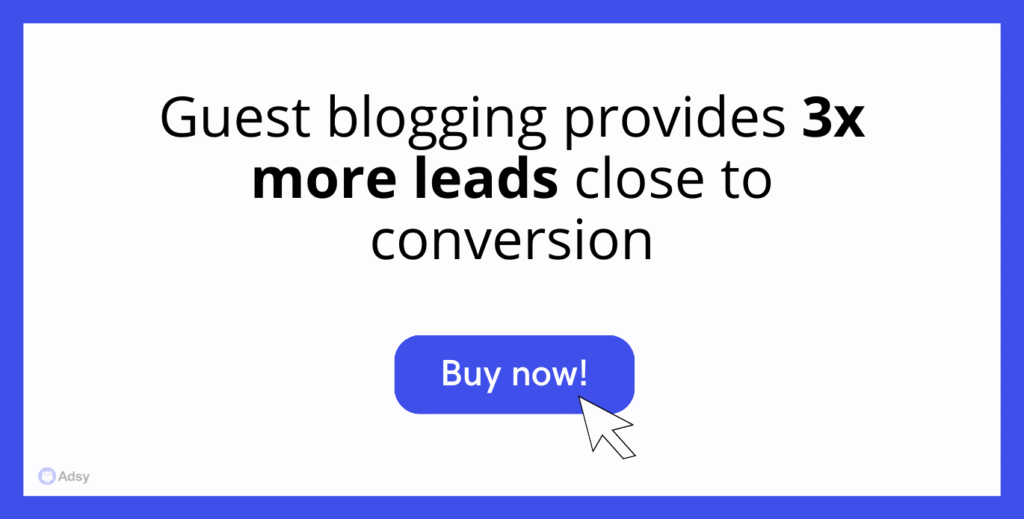
Source: Adsy
Over time, consistent guest posting builds both backlinks and visibility. It also opens doors for relationships with other site owners, which can lead to more opportunities without even asking.
2. Broken Link Building
Broken link building works on a simple idea: you help websites fix dead links, and in return, they often replace them with your content.
Every website has broken links over time. Pages get removed, URLs change, or resources go offline. For site owners, these broken links are a problem because they hurt user experience and can affect SEO. That’s where this strategy fits in.
The process starts with finding relevant pages in your niche that already link out to other resources. Then you check those outbound links using tools or browser extensions to spot broken ones. Once you find them, you look at what the original page was about and see if you already have similar content. If not, you can even create a new piece that matches the topic.
After that, you reach out to the website owner. The message should be simple and helpful. You’re not asking for a favor. You’re pointing out a broken link and offering a working alternative that their readers can use instead.
What makes this method effective is timing and usefulness. You’re solving a real issue for the website owner. In many cases, they’ll update the link without much hesitation because it improves their page.
3. HARO / Journalist Requests
HARO (Help a Reporter Out) and similar journalist platforms are one of the easiest ways to earn high-authority backlinks without paying for them. The idea is straightforward. Journalists need expert input for their articles, and you provide it.
You sign up for these platforms and start receiving daily queries from reporters. These questions usually come from news sites, blogs, and media outlets looking for quotes or insights on specific topics. If your response gets selected, your name and website often get featured in the article with a backlink.
The key here is speed and relevance. Journalists receive dozens of replies, so your response needs to be clear, direct, and useful. Long introductions or generic answers usually get ignored. What works better is giving a short, strong insight that directly answers their question.
You don’t need to be a big brand or expert to use this method. Even small businesses and individuals get featured if their response adds value. Over time, these links build strong authority because they come from trusted media sites.
4. Creating Link-Worthy Content (Link Bait)
Link-worthy content is anything that naturally makes people want to reference or share it. Instead of asking for backlinks, you create something that earns them on its own.
This usually works best with content that offers something new. It could be original data, a detailed guide, a comparison, or even a simple breakdown of a complex topic. The goal is to give readers something they can’t easily find elsewhere.
One strong format is data-based content. When you publish unique insights, people in your industry often cite it in their own articles. Another effective format is deep guides that fully explain a topic in one place. These tend to get picked up as references over time.
Design also plays a role. Clear structure, simple language, and easy navigation make your content more usable. If someone finds your page helpful while writing their own content, linking to it becomes a natural choice.
What matters most is usefulness. If your content saves time, answers questions clearly, or adds a fresh angle, it becomes linkable. This reduces the need for outreach because links start coming in through discovery.
5. Digital PR & Story-Based Outreach for Free Backlinks
Digital PR is about turning your ideas, data, or insights into stories that media sites actually want to publish. Instead of asking for a backlink directly, you focus on creating something newsworthy.
This can come from different angles. You might share industry data, highlight trends, or even present a unique opinion backed by facts. The stronger your angle, the more likely journalists and bloggers are to pick it up.
Once you have a story, outreach becomes important. You identify writers or publications that cover your niche and pitch your idea in a simple, clear way. No long introductions or complicated explanations. Just what the story is and why it matters to their readers.
The strength of digital PR lies in authority. Backlinks from media sites carry more weight because they come from trusted sources. These links also tend to get picked up by other websites, creating secondary mentions without extra effort.
A study found that 48.6% of marketers believe digital PR is the most effective tactic for 2025.
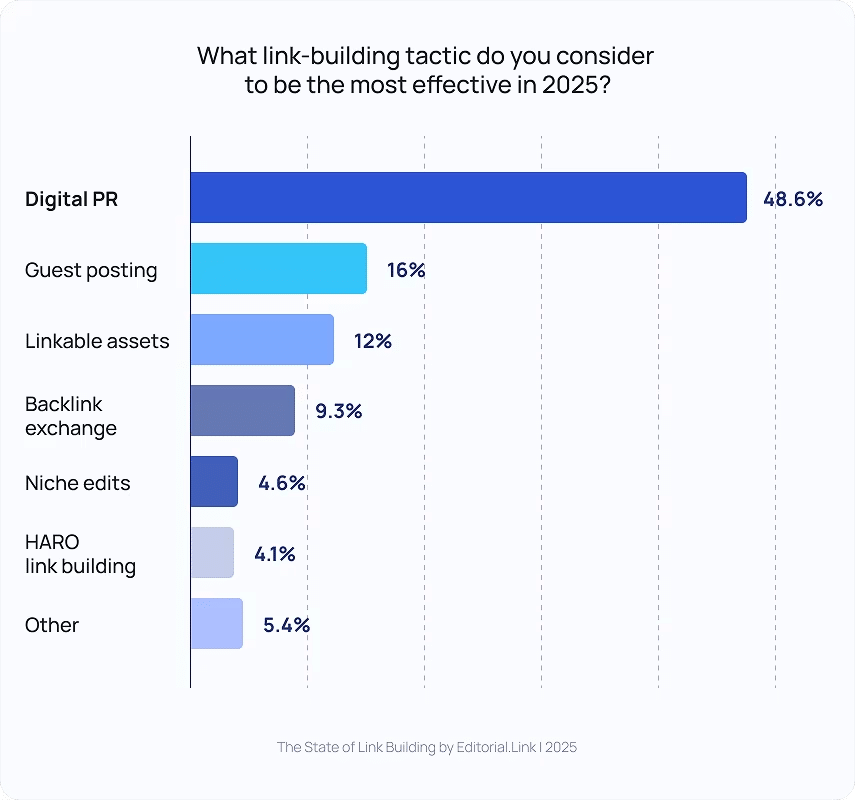
Source: BuzzStream
This shows how strongly it is being relied on for visibility and authority building.
Another benefit is reach. A single story can be republished, quoted, or referenced across multiple platforms, multiplying the impact of one campaign.
6. Competitor Backlink Analysis
One of the most practical ways to build free backlinks is to study what is already working for your competitors. If a site is ranking well in your niche, there is a good chance its backlink profile is playing a big role in that visibility.
The process starts with identifying your main competitors in search results. These are not always direct business rivals; they are simply the websites ranking for the same keywords you want to target. Once you have a list, you can use SEO tools to see where their backlinks are coming from.
What you are looking for are patterns. If multiple competitors are getting links from the same blogs, directories, or resource pages, those are strong opportunities for you as well. It shows those sites are open to linking to content like yours.
The next step is figuring out how those links were earned. In many cases, it’s guest posts, mentions in list articles, or resource page placements. This gives you a clear idea of what type of content or outreach is working in your space.
From there, your goal is not just to copy, but to improve. If a competitor has a basic guide that earned links, you can create something more detailed or updated. If they got links through outreach, you can approach the same sites with a better angle.
7. Resource Page Link Building
Resource page link building focuses on getting your website listed on pages that already collect helpful free backlinks for a specific topic. These pages are usually created to guide readers toward useful tools, guides, or references.
You’ve probably seen them before. They often have titles like “Useful Marketing Resources” or “Best SEO Tools and Guides.” These pages exist for one reason: to provide value by linking out to quality content. That’s exactly where your opportunity comes in.
The first step is finding these pages in your niche. You can do this by searching terms like “your topic + resources” or “helpful links + your industry.” Once you start looking, you’ll notice there are many sites that maintain these lists.
After that, you check whether your content fits their theme. Not every page will be a match. Resource pages usually only include content that is evergreen, useful, and clearly structured. If your content is too promotional or shallow, it won’t be considered.
When you reach out, keep your message simple. You are not asking for a favor; you are suggesting a useful addition to their existing list. If your content genuinely helps their audience, it has a strong chance of being included.
8. Blog Commenting & Community Participation
Blog commenting and community participation is one of the oldest methods of getting free backlinks, but it still works when used properly. The key difference today is that it’s no longer about dropping links everywhere. It’s about showing up in the right conversations.
Most blogs, forums, and niche communities allow users to share insights and sometimes include a link in their profile or comment section. While these links are often no-follow, they still help with visibility, traffic, and brand presence.
The real value comes from relevance. When you actively engage in discussions related to your niche, people start noticing your name or brand. Over time, this can lead to natural clicks and even direct backlinks from others who reference your content.
The mistake many people make is treating this like a shortcut. Random comments with links rarely add value and usually get ignored or removed. A better approach is to contribute meaningful thoughts, answer questions, or add context to ongoing discussions.
Communities like niche forums, Reddit threads, and active blog comment sections are good places to start. The focus should always be on being part of the conversation first.
While this method won’t give you high-authority backlinks on its own, it supports your overall strategy. It builds awareness around your content, which often leads to organic mentions and stronger links over time.
9. Use Social & Content Distribution Platforms for Free Backlinks
Social and content distribution platforms help you get your content in front of more people, which often leads to free backlinks over time. These platforms include LinkedIn, Medium, Reddit, Quora, and similar communities where users actively share and discuss content.
The process starts with repurposing your existing content. Instead of only publishing on your website, you adapt it for different platforms. For example, a blog post can be turned into a LinkedIn article, a Medium post, or a detailed answer on Quora.
Each platform works differently, but the goal is the same: visibility. When more people see your content, the chances of it being referenced by other websites increase naturally. Bloggers, journalists, and creators often find ideas from these platforms and link back to original sources.
Reddit and Quora are especially useful for long-term visibility. If your answer is helpful and ranks within a thread or topic, it can keep sending traffic and attention for months or even years.
LinkedIn also plays a strong role, especially in B2B spaces. Content that performs well here often gets shared further, increasing the chance of organic mentions across blogs and websites.
10. Free Tools, Templates & Assets
Creating free tools, templates, or useful assets is one of the strongest ways to earn free backlinks without asking for them. The idea is simple: you build something people regularly use, and they naturally link to it when they recommend resources in their content.
This can take many forms. It could be a calculator, a checklist, a content template, a spreadsheet, or even a simple online tool that solves a small problem. The key is usefulness. If it saves time or makes a task easier, people will share it.
What makes this strategy powerful is repetition. Unlike a blog post that gets linked a few times, a useful tool keeps getting discovered and mentioned over and over again. Bloggers, students, marketers, and businesses often link to tools that help them explain or simplify something for their audience.
You don’t need complex development skills to start. Even simple downloadable templates can attract links if they solve a clear problem. For example, SEO checklists, outreach email templates, or content calendars often get picked up by blogs in the same niche.
The other advantage is longevity. Once your tool or asset starts ranking or getting shared, it can continue earning backlinks for years with very little maintenance.
Wrapping Up
Free backlinks come with useful content and real connections. The methods you saw above all work in different ways, but they share one thing in common. They give other websites a reason to mention or reference your content.
Some strategies bring faster results, like guest posting and digital PR. Others take time, like tools or content that naturally attracts links over months. None of them work in isolation. The strongest results come when a few of these methods are used together.
FAQs
1. Are free backlinks still effective in 2026?
Yes, free backlinks still work in 2026. They help build authority and improve visibility in search results. The key is focusing on quality and relevance instead of collecting random links that don’t match your niche or audience.
2. Which free backlink strategy works the fastest?
Guest posting and digital PR usually give the fastest results. They place your content on active websites with existing traffic. This helps you earn backlinks quickly while also improving visibility and building relationships in your industry.
3. Do all backlinks help improve rankings?
No, not all backlinks have the same impact. Links from relevant and trusted websites carry more weight. Low-quality or unrelated links often add little value and may not improve your rankings in a meaningful way.
4. Can I build free backlinks without outreach?
Yes, but it takes time. Creating useful tools, guides, and content can naturally attract backlinks. When your content solves real problems, other websites may link to it without you having to ask.
5. How long does it take to see results from backlinks?
It usually takes a few weeks to a few months. Search engines need time to crawl and evaluate new links. Consistent effort builds stronger results over time, especially when combined with quality content.