
Most startups know they need backlinks, but the usual advice feels built for big companies with big budgets. Publish huge reports. Hire PR agencies. Run large outreach campaigns. That sounds great, until you’re a small team watching every dollar and juggling product, sales, and growth at the same time.
The good news is link building for startups does not need deep pockets. It needs smart moves. Startups actually have advantages bigger brands don’t — speed, founder expertise, niche focus, and the ability to create useful things quickly. When used right, those strengths can turn into strong backlinks without heavy spending.
In this blog, you’ll see budget-friendly link building strategies startups can run without a large team or agency, and still build real authority step by step.
1. Founder-Led PR and Expert Quotes
One of the most underused link building advantages startups have is the founder’s voice. Early-stage companies often sit close to the problem they are solving, which means the founder usually has sharp, practical insights. Journalists and editors look for exactly that — clear opinions, real experience, and short expert comments they can include in stories.
This creates a strong path for link building without spending on PR agencies. Reporters regularly write about trends, product categories, market shifts, and user behavior. When a founder gives a useful quote, the publication often mentions the company with a backlink. These are editorial links, which carry more weight than most outreach links.
You can find these opportunities through journalist request platforms, reporter newsletters, and industry media queries. Check them daily and reply fast. Timing matters a lot. Keep answers short, direct, and practical. Avoid marketing language. Write like you are explaining something to a smart customer, not pitching a product.
Prepare a ready-to-send expert bio with your name, title, startup, and website. That saves time and increases your reply speed. Over a few months, consistent expert contributions can build high-authority links and position the founder as a credible voice in the space.
2. Data-Driven Mini Studies and Original Insights
Startups sit on useful data even when they think they don’t. Product usage trends, feature adoption rates, onboarding drop-offs, survey responses, and internal benchmarks can all be turned into small data stories. You don’t need a 50-page research report. Even a tight, one-page insight supported by a simple chart can attract links when the takeaway is clear and timely.
Writers love citing numbers because statistics strengthen their articles. When your startup publishes a focused data insight, journalists and bloggers can reference it as a source. That shifts your content from “just another blog post” to something people cite and link to.
Simple formats work well — a short user survey, a usage trend snapshot, a year-over-year growth chart, or a forecast visual.
For example, a chart showing global AI tool users growing from roughly 350 million to over 1.1 billion within a few years instantly gives writers a number they can quote and attribute.

Image Source: Digital Silk
Clean visual, clear headline, one strong takeaway — that’s enough.
After publishing, reach out to writers already covering your space. Share the key stat and why it matters to their readers. No long pitch needed. One strong data point with a visual can earn links from many articles over time, which makes this approach both scalable and budget friendly.
3. Free Tools, Templates, and Simple Calculators
Small free tools and templates often earn more links than long articles. The reason is simple — people link to things that help their readers do something. A focused tool that solves one small problem can attract links for years.
Startups and small businesses can build lightweight assets without heavy engineering. A calculator, checklist, scorecard, prompt library, worksheet, or planning template works well. It should be tied closely to your product space so the links stay relevant. Think in terms of utility, not complexity.
For example, a budgeting startup can offer a simple savings calculator. A marketing startup can publish a campaign checklist. A SaaS tool can create a comparison worksheet. Keep it practical and easy to use.
Once live, promote it through communities, niche blogs, and resource pages. Reach out to writers who publish guides and suggest the tool as a helpful add-on for their readers. Because the asset is useful, outreach feels natural rather than pushy.
4. Startup Directories and Ecosystem Listings
If you’re new in link building for startups, startup directories and ecosystem platforms are one of the fastest ways to build your first layer of quality backlinks in budget. These are sites that list startups, SaaS tools, apps, and new products — and many of them allow free submissions. The links are easy to earn, relevant to your space, and completely natural.
Think product directories, startup databases, accelerator portfolios, incubator pages, founder communities, and tech stack listings. If your startup uses other tools, check their partner or customer showcase pages too. Many companies feature their users and link back to them.
The value here goes beyond just the link. These listings help with discovery, brand trust, and entity recognition. Search engines see your startup mentioned across consistent, topic-related platforms, which strengthens your overall credibility.
Do this properly, not in bulk spam style. Fill profiles fully. Add a real description, screenshots, category tags, and your correct company details. A half-empty listing brings little value.
Set a simple goal — submit to a few strong directories each week. Over a month or two, you’ll build a solid base of relevant backlinks that support your higher-effort link strategies later.
5. Strategic Guest Content
Guest content still works for startups when done with focus and selectivity. The mistake many founders make is blasting generic guest posts to any blog that accepts content. That burns time and produces weak links. A smarter approach targets a small number of niche sites your actual buyers read.
A study found that the average guest article brings around 50 referral visits, with top-performing posts reaching 500+ visits. About 15% of guest posts drive more than 100 visits, while many low-quality placements bring fewer than 10.
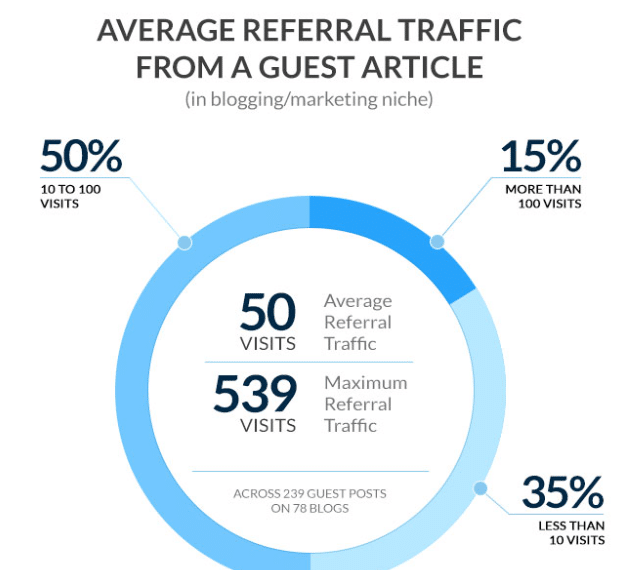
Image Source: BloggerJet
That means they’re still important and playing a major role.
So look for industry blogs, founder publications, niche newsletters, and community sites in your market. Study what they publish. Pitch topics that add real value — lessons from building your product, mistakes you learned from early users, practical frameworks, or real case breakdowns.
Write from experience, not theory. Editors prefer grounded insights over recycled tips. When your article teaches something useful, your link feels earned, not inserted.
Keep your pace realistic. One strong guest article on a relevant site beats ten posts on unrelated blogs. Over time, selective guest content builds authority, referral traffic, and relationships with editors, which compound into more link opportunities later.
Conclusion
Link building for startups works best when it grows out of things you’re already doing — sharing insight, building useful tools, publishing small data findings, and participating in your ecosystem. You don’t need a big budget or a huge outreach team. You need assets that help people and signals that show your startup is active and credible in its space.
A few strong links from the right places will move you further than hundreds of weak ones. Focus on usefulness, relevance, and consistency. Build things worth citing, speak where your audience listens, and turn everyday startup activity into link opportunities. That approach scales, even on a tight budget.
FAQs
1. How long does link building take to show results for a startup?
Link building rarely shows impact overnight. Most startups begin seeing movement in rankings and referral traffic within 6–12 weeks after earning quality links. The effect builds over time. A steady flow of relevant backlinks usually beats short bursts of heavy link activity.
2. Should startups buy backlinks to save time?
Buying cheap backlinks often creates more risk than benefit. Many paid links come from weak or unrelated sites and add little authority. Startups get better long-term value from earned links through PR, tools, data insights, and partnerships. Those links stay safer and carry stronger trust signals.
3. How many backlinks does an early-stage startup need?
There’s no fixed number. A startup in a niche market can gain traction with a few dozen strong, relevant links. In competitive spaces, you may need more. Focus first on quality sources your target audience actually reads. Link relevance and authority matter more than raw count.
4. What type of content attracts links fastest for startups?
Useful assets attract links faster than general blog posts. Simple tools, calculators, templates, original data charts, and practical guides get cited more often. Writers and bloggers prefer linking to resources that help their readers take action or understand a trend quickly.
5. Can a small startup handle link building without an SEO agency?
Yes, many startups manage early link building in-house. Founder quotes, directory listings, partnerships, and small data studies do not require a large team. A simple weekly outreach routine and one useful asset at a time can build solid backlinks without agency support.