
If you run a law firm website, you’ve probably heard this advice a hundred times — “You need backlinks to rank.” That part is true. But what most people don’t tell you is that link building for law firm is a different game altogether.
In legal SEO, the margin for error is small. One wrong shortcut — cheap guest posts, random directories, spammy link packages — and you don’t just waste money, you risk your site’s credibility. Google holds legal websites to a higher trust standard, and honestly, that makes sense. When people search for legal help, the stakes are real. Rankings aren’t just traffic, they’re tied to decisions, cases, and outcomes.
But here’s the good news — law firms actually need a handful of strong, relevant, editorial links.
In this blog, I’m going to walk you through link building strategies that actually work for law firm websites and won’t put your domain at risk.
#1: Editorial Digital PR & Journalist Outreach
One of the strongest and safest ways to build high-authority links for a law firm website is through editorial digital PR and journalist outreach. This is where you or someone on your team acts as a subject-matter expert and contributes insights, quotes, or explanations to reporters and writers working on stories.
When your input gets used, your firm is often credited with a link. These are not random blog links, they usually come from news sites, industry publications, and trusted media platforms.
This works especially well for lawyers because journalists constantly need expert legal commentary. News stories regularly touch on regulations, lawsuits, compliance issues, consumer rights, employment disputes, privacy laws, and policy changes. If your firm can respond quickly with clear, plain-English insight, you become a reliable source. Over time, reporters may even start reaching out to you directly.
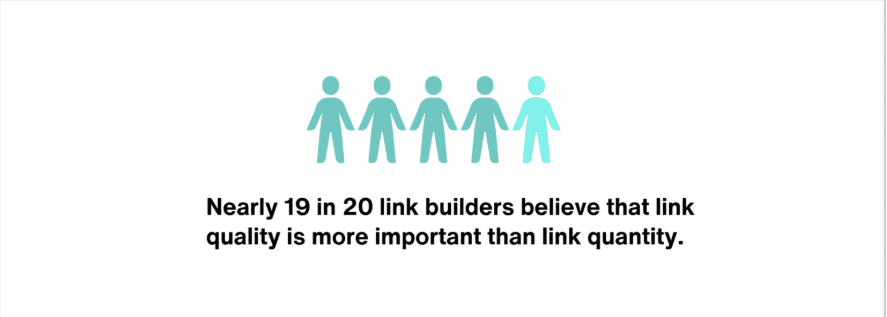
Image Source: DemandSage
You can also see this reflected in industry surveys — as shown in the stat above, nearly 19 out of 20 link builders say link quality matters more than link quantity. That’s why a single mention from a respected publication or news outlet can carry more ranking weight and trust than dozens of weak links from unrelated blogs.
But the key is speed. Journalists work on deadlines. If you take two days to reply, you’re too late. Set up a simple process — monitor journalist request platforms, pre-prepare short expert bio snippets, and keep your answers tight and usable.
#2: Data-Driven Legal Content & Research Assets
Most law firm blogs repeat the same topics — what to do after an accident, how to file a claim, steps in a divorce, and similar explainers. Helpful, yes, but not very linkable.
If you want strong websites to reference and link to your pages, you need to publish something they can cite, not just skim. That’s where data-driven legal content makes a real difference.
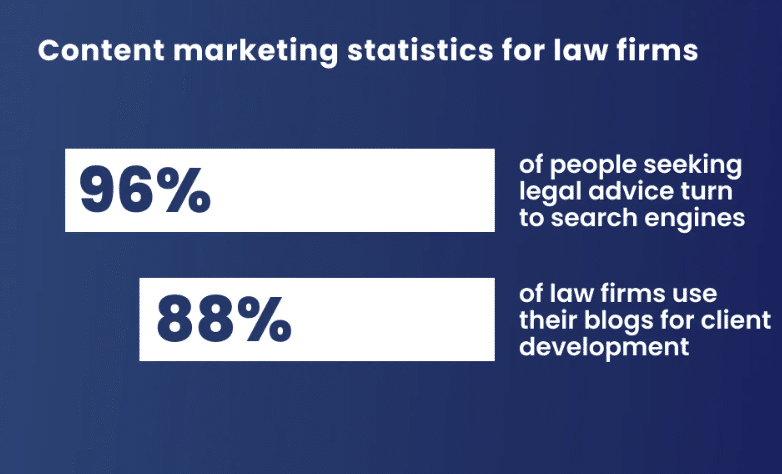
Image Source: Grow Law
Look at the stat above — around 96% of people seeking legal advice start with search engines, and a large majority of law firms already use their blogs for client development.
That tells you two things. First, legal search demand is huge. Second, a lot of content already exists. So if your content looks like everyone else’s, it won’t stand out — and it won’t attract links. But when you publish original data, structured findings, or trend breakdowns, you give writers and publishers a reason to reference you.
This doesn’t mean you need a massive research budget or academic study. Many firms already sit on useful internal insights — anonymized case trends, common dispute types, settlement timelines, regional claim patterns, regulatory changes clients ask about repeatedly. When you organize that into a simple report, summary page, or visual study, it becomes a reference asset instead of just another blog post.
#3: Authority Guest Publishing on Legal & Industry Sites
Guest publishing still works for law firms — but only when it’s done selectively and with the right standards. As part of a solid link building for law firm websites strategy, this approach is about earning credibility, not just placing links. I’m not talking about mass guest posting on random blogs that accept anything. That approach is outdated and risky.
What works today is contributing real, experience-based articles to respected legal publications, niche industry sites, bar association blogs, and trusted business platforms your potential clients actually read.
Think of it this way — if a site would be credible enough to show a client, it’s credible enough to pitch. Your goal isn’t just a backlink — it’s association. When your name appears alongside thoughtful legal commentary on a recognized platform, that link carries both ranking value and trust value.
The content itself needs to come from real legal experience, not recycled SEO advice. Editors can tell the difference. Write about patterns you’ve seen in cases, mistakes clients often make, regulatory changes that affect businesses, or practical legal frameworks people can apply. Use plain language. Avoid self-promotion inside the article. Teach first — mention your firm second.
Your author bio matters more than people think. That small section is where your link usually lives, and it’s also what builds credibility. A clean bio with your role, specialty, and firm name converts better than hypey marketing lines. Over time, a handful of strong guest publications can build a solid authority layer around your domain — and unlike spammy guest posts, these links tend to hold their value.
#4: Strategic Partnerships & Local Authority Links
Law firms have one big advantage in link building that many other businesses don’t — strong local and institutional connection opportunities. You’re already part of a professional and geographic ecosystem. That means you can earn high-quality links through real relationships instead of cold outreach alone.
Industry survey data shows that local link building is the top local SEO tactic businesses want to invest more in — even above content and on-site optimization.
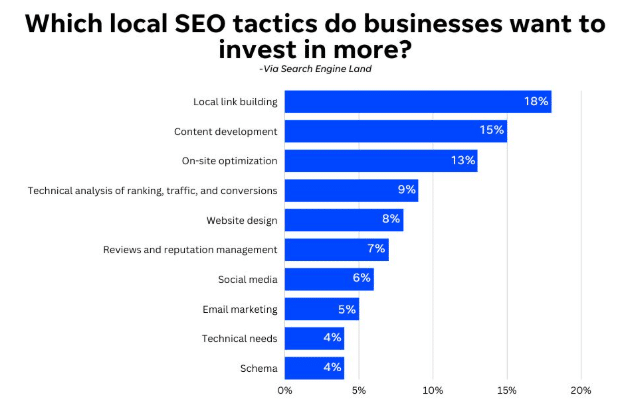
Image Source: LocaliQ
That makes sense, especially for law firms, because legal clients usually search with local intent. When your links come from trusted local and professional sources, they don’t just help rankings — they reinforce geographic relevance and credibility.
Start with organizations that already overlap with your work: chambers of commerce, universities, bar associations, legal aid groups, nonprofit programs, and business networks. Many of these sites maintain member directories, partner pages, contributor lists, and event coverage sections where your firm can be mentioned and linked. If you sponsor a legal awareness workshop, speak at a university event, or support a community initiative, a link often follows naturally.
You can also build partnerships that produce shared resources — co-written guides, compliance checklists, public education materials, or event summaries. These collaborations usually get published on multiple sites, which creates contextual, relevant backlinks without manipulation.
#5: Linkable Legal Resources & Public Tools
If you want links without constantly pitching, create resources that people naturally want to reference. I call these “reference assets.” For law firms, this can include detailed legal guides, step-by-step checklists, eligibility explainers, rights breakdowns, process maps, and simple legal tools. When done right, these pages become go-to references for writers, bloggers, and even other lawyers.
Think about what people repeatedly search and ask: timelines, requirements, qualification criteria, documentation lists, penalty ranges, procedural steps. Turn those into structured, well-formatted resources instead of short blog posts. Depth and clarity are what make a page linkable.
Simple tools can also attract links. Things like compensation estimators, compliance checkers, deadline calculators, or interactive questionnaires give your page practical value. Even a well-built downloadable checklist can earn citations if it’s genuinely useful.
Structure matters a lot here. Use clear headings, definitions, summaries, and plain explanations. Avoid heavy legal jargon where possible. Journalists and content writers prefer sources their readers can understand quickly. Update these resources regularly so they stay accurate — fresh, maintained pages attract more trust and more links over time.
This strategy turns your website into a reference library instead of just a marketing brochure. And reference libraries naturally attract citations — which, in SEO terms, means high-quality backlinks without constant chasing.
Conclusion
Link building for law firm websites is earning trust. A few strong, relevant links from real publications, organizations, and industry sites will always beat a pile of weak ones.
If you focus on expert contributions, useful data, solid partnerships, and practical resources, links come as a byproduct of value. That’s the part many people miss. Do things that deserve to be cited, not just counted. Stay consistent, stay ethical, and think long term. That’s how link building for law firms actually turns into rankings, credibility, and real client inquiries.
But if you don’t have the time or expertise to handle all this yourself, reach out today. We’ll help you get backlinks from top media publications like Forbes, Business Insider, Entrepreneur, and more!
FAQs
1. How many backlinks does a law firm actually need to rank well?
There’s no fixed number. Law firm SEO is less about volume and more about quality. A handful of strong, relevant editorial links from trusted legal or local sites can outperform hundreds of low-quality links from unrelated websites.
2. Are paid links safe for law firm SEO?
Direct paid links on random blogs or link networks are risky and often against search engine guidelines. For law firms, it’s safer to invest in PR, partnerships, and expert contributions where links are earned through value and credibility.
3. What types of websites are best for law firm backlinks?
The best links come from legal publications, news sites, bar associations, universities, reputable business platforms, and strong local organizations. Relevance and trust matter more than pure domain metrics when evaluating link value for legal sites.
4. How long does link building for law firms take to show results?
Link building for law firm is slow but compounding. You may see early movement in a few months. However, real authority gains usually show over 4–8 months. Consistency and link quality matter more than short-term bursts of activity.
5. Can content alone attract backlinks for a law firm?
Yes, if the content is reference-worthy. Original data reports, legal guides, checklists, and tools can naturally earn links over time. Basic blog posts rarely attract links, but practical, well-structured resources often do.