
Link building for healthcare is not like link building in most other industries. You can’t just go out, drop guest posts everywhere, buy a few placements, and call it a day. Health topics sit in a sensitive space. Real people make real decisions based on what they read — about treatments, providers, medicines, and risks. That means search engines look at healthcare websites with a much stricter lens, and so should you.
A lot of clinics, health startups, and medical brands still follow generic SEO playbooks. They chase easy backlinks from random blogs or low-quality directories. On paper, it looks like progress. In reality, it can hurt both rankings and reputation. In healthcare, the wrong link from the wrong place can send the wrong trust signals. And trust is the main currency here.
In this guide, we’ll walk through practical, compliance-safe link building strategies for healthcare websites.
#1. Earn Editorial Links Through Expert Contributions
One of the safest and most reliable ways to build links in healthcare is by contributing expert insights to journalists, publishers, and industry writers. Instead of asking for links, you earn them by being useful. Reporters are constantly looking for medical experts, clinical opinions, and practical explanations they can quote in their articles.
When your input helps them, they credit you — often with a backlink.
This works especially well for doctors, licensed practitioners, clinical researchers, and healthcare founders with real experience. Your credentials matter here. A quote from a certified professional carries weight, and publishers prefer it over generic marketing input. That’s why expert-driven outreach is both compliance-safe and SEO-safe. You’re not making claims in ads — you’re adding context to real stories.
The key is to keep responses factual, balanced, and non-promotional. Don’t pitch your clinic or push your product inside expert quotes. Focus on education. Explain risks, common mistakes, patient considerations, or treatment basics in simple language. Journalists want clarity, not marketing copy.
You can find these opportunities through journalist request platforms, PR newsletters, and direct outreach to health writers. Over time, consistent expert contributions can land mentions in news sites, medical publications, and niche health blogs. These links are hard to fake and hard to replace — which is exactly why they are valuable.
#2. Create Research-Backed Resources That Deserve Citations
Another strong and safe approach is to publish resources that other sites naturally want to cite, and it’s best in link building for healthcare. This includes original research, patient surveys, treatment explainers, data roundups, and practical medical guides. When your content becomes a reference point, links come in without aggressive outreach.
Healthcare is one of the few spaces where data and clarity beat clever marketing. A well-structured guide that explains a condition, compares treatment paths, or breaks down risk factors can attract links from bloggers, educators, nonprofits, and even news writers. The reason is simple — people prefer linking to sources that are detailed and responsibly written.
You don’t always need a big clinical study to make this work. Smaller data projects can also earn links. For example, analyzing anonymized patient trends, publishing yearly treatment cost comparisons, or summarizing guideline updates in plain language can be very useful. Visual charts and simple infographics also help — writers like assets they can reference.
Accuracy is critical here. Always cite medical sources, show references, and include medical reviewers where possible. Avoid bold claims or miracle-style headlines. Healthcare content should inform, not hype. Adding review notes from licensed professionals also improves credibility.
Once published, reach out to relevant sites that maintain resource pages or educational libraries. Don’t “beg for links.” Show them why your resource adds value to their readers. When done right, this method builds high-quality links and strengthens your reputation at the same time.
#3. Build Links Through Trusted Healthcare Partnerships
Partnership-based link building is often overlooked, but in healthcare it’s one of the safest options available. Instead of chasing strangers for backlinks, you work with organizations you already connect with — medical associations, nonprofits, universities, local health groups, and industry bodies. These relationships often lead to natural, policy-safe links.
Many healthcare organizations maintain partner pages, member directories, contributor lists, and campaign pages. If you collaborate on awareness drives, screenings, educational webinars, or community programs, a link mention usually makes sense. These are not forced placements — they are part of real cooperation.
For example, if a clinic supports a public health awareness campaign, the campaign site may list partners. If a healthcare SaaS company works with a hospital network, they may be featured in a technology partner section. If a doctor contributes to a university seminar, they may be listed on the event page. These links are context-based and fully defensible.
The important part is authenticity. Don’t create fake partnerships just for links. Work on real projects — joint content, research summaries, patient education events, or training sessions. The link becomes a byproduct of the work, not the only goal.
Plus, these links are super important — because now a large share of what people read comes directly from AI summaries at the top of search results, not just from the blue links below.
Recent large-scale research by Ahrefs that analyzed 1.9 million AI Overview citations found something very interesting: about 76% of the sources that AI Overviews cite are already ranking in the top 100 search results.
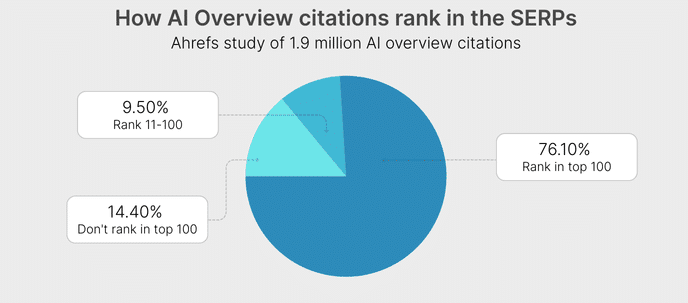
Image Source: Saffron Edge
Around 9.5% come from pages ranking between positions 11–100, and only about 14.4% come from pages that don’t rank in the top 100 at all.
What this tells us is simple but powerful. AI summaries don’t usually pull sources from random unknown pages. Most of the time, they rely on sites that already have some search visibility and authority. And one of the strongest drivers behind that authority is high-quality, trustworthy backlinks — especially from credible publications, medical organizations, and expert sources.
So if you’re building compliance-safe, editorial, healthcare-relevant links, you’re not just helping your Google rankings. You’re also increasing your chances of being picked up and cited inside AI summaries. That’s where a growing number of users are getting their answers now — especially for health questions.
#4. Get Listed on Trusted Healthcare Resource Pages and Education Hubs
One of the most practical and compliance-safe link building methods in healthcare is getting included on trusted resource pages. These are pages built specifically to help patients, caregivers, and professionals find useful, vetted information. Think hospital resource libraries, university health pages, nonprofit guides, condition-specific support sites, and public health department portals.
These pages exist to serve readers. That’s why links from them carry real trust signals. And unlike random guest post sites, they are usually reviewed and maintained by real organizations. From a search and credibility point of view, this is exactly the kind of environment you want your healthcare brand to be associated with.
The way to earn these links is by creating genuinely useful educational content first. For example, plain-language treatment guides, prevention checklists, patient worksheets, recovery timelines, medication safety explainers, or symptom decision charts. When your resource actually helps patients understand something better, outreach becomes much easier and more natural.
Then you reach out to organizations that maintain related resource lists. Don’t send spammy templates. Write a simple, respectful message explaining what your resource covers and why it could help their readers. Make it about usefulness, not SEO.
#5. Use Compliance-Safe Digital PR Around Health Awareness and Data Stories
Digital PR works very well in healthcare — but only when it’s handled carefully. You’re not trying to create hype. You’re trying to contribute useful information to ongoing public conversations. When done right, this leads to media mentions and editorial links from news sites, industry publications, and health blogs.
A safe angle for healthcare PR is education and awareness. For example: new patient behavior data, seasonal health risk reminders, screening awareness months, preventive care trends, or cost-of-treatment reports. Journalists often look for expert input and supporting data around these topics.
You can also build small data stories from your own internal insights — anonymized and aggregated, of course. Things like appointment trend shifts, common patient questions, therapy adoption rates, or regional pattern changes can be turned into press-friendly summaries.
Timing matters here. Tie your outreach to real events — awareness months, guideline updates, policy changes, or new research releases. That makes your pitch relevant instead of random.
Wrapping Up
When it comes to link building for healthcare, the safest wins are usually the most boring ones — expert quotes, education resources, real partnerships, and trusted mentions.
Healthcare sites grow authority when they’re referenced by credible sources, not when they collect random backlinks. That’s why a careful, compliance-safe approach works better long term. Put your effort into content that helps patients and supports professionals, and earn links from places that would still make sense even without SEO. That’s how link building for healthcare stays both effective and safe.
FAQs
1. Is link building for healthcare websites different from normal SEO?
Yes. Healthcare falls under high-trust topics, so search engines review signals more strictly. Links should come from credible, relevant sources. Expert-backed content, medical review, and educational value matter more here than link volume or fast placements.
2. Are paid backlinks safe for healthcare industry sites?
In most cases, no. Paid placements on generic blogs or link farms can create compliance and reputation risks. Healthcare brands should avoid disguised sponsored links and instead focus on earned editorial mentions from trusted publications and organizations.
3. What types of links work best for healthcare websites?
Links that come from medical publications, universities, hospitals, nonprofits, and expert media quotes work best. Resource pages and education hubs are also strong. These links show topical relevance and trust, which healthcare sites need more than raw quantity.
4. Can doctors and clinics earn links without doing heavy outreach?
Yes. Publishing clear patient guides, treatment explainers, prevention checklists, and simple research summaries often attracts natural links. Journalists and educators frequently reference well-written medical resources, even when the clinic did not actively pitch them.
5. Does link building for healthcare help with AI search visibility?
Yes. AI summaries and search overviews often cite authoritative sources. Sites with strong, trustworthy backlinks and expert content are more likely to be referenced. Good healthcare links improve both classic rankings and newer AI-driven visibility.