Link building for ecommerce is very different from link building for blogs or service-based websites. Most ecommerce stores rely heavily on product and category pages, and the reality is simple — people don’t naturally link to product pages. This is one of the biggest reasons ecommerce brands struggle to rank, even when their products are solid and their on-page SEO is in place.
In most cases, the issue isn’t a lack of effort — it’s the wrong approach. Many store owners chase high-authority links without considering relevance, intent, or where those links actually point. Others rely on automated outreach or low-quality placements that may boost numbers temporarily but do nothing for long-term growth or sales.
In this blog, we’ll walk through 5 proven link-building strategies designed specifically for ecommerce websites.
#1: Use HARO & Qwoted Link Building
One of the most powerful ways to earn high-quality backlinks for your ecommerce store is through platforms like HARO and Qwoted. These platforms connect journalists and writers with industry experts, giving you the opportunity to be featured in articles, roundups, and media stories.
Unlike generic link-building methods, this approach creates links that are both relevant and authoritative, while also potentially driving targeted traffic to your store.
To get started, first set up your profiles on both platforms. On HARO, register as a source by adding your email in the box, and click “Sign up.”

Source: HARO
And carefully select the categories that match your niche. Your profile should clearly highlight your expertise, include a professional email, and briefly explain what your ecommerce brand does.
On Qwoted, complete your expert profile by showing your experience, niche knowledge, and areas where you can provide insight. Adding a professional photo and company information makes your profile more trustworthy.
Once your profiles are ready, monitoring queries consistently is key. Journalists post requests multiple times per day, often on tight deadlines, so responding quickly increases your chances of being featured.
Look for queries that align with your products, niche, or industry trends. Even small, niche-specific queries can result in highly relevant backlinks that drive quality traffic.
When responding to queries, keep these points in mind.
- Respond quickly: Journalists work on tight deadlines. Try to reply within the first 2-3 hours of seeing a query.
- Be concise: Keep your response short and to the point—2–3 sentences is ideal.
- Provide unique value: Share insights, data, or examples that only your brand or experience can offer. And don’t ramble or include irrelevant information. Make it easy for the journalist to use your response.
- Include your credentials: Briefly mention your expertise or why your opinion matters (e.g., “As an ecommerce brand owner with 5 years in the kitchen tools industry…”).
- Offer a quick follow-up: Let them know you’re available for clarification or additional insights if needed.
#2: Product-Led Link Building
Product pages are the heart of any ecommerce store. But they often get overlooked when it comes to link building. Unlike blogs or resource pages, product pages don’t naturally attract backlinks unless you actively promote them. Product-led link building focuses on creating opportunities for other websites to reference your products in meaningful ways, which boosts both SEO and visibility.
A common approach is to target reviews, comparison posts, and product roundups. For example, if you sell kitchen gadgets, reaching out to bloggers, niche websites, or YouTube reviewers who frequently create “best of” or comparison content can earn high-quality backlinks to your product or category pages.
Make sure your products are presented clearly, with high-quality images, detailed descriptions, and any unique features highlighted. The easier you make it for writers or reviewers to showcase your products, the more likely they are to link back.
Another tactic is to create data-driven content or unique insights around your products. For instance, you could compile user surveys, usage statistics, or case studies that highlight how your products solve real problems. Sharing this data with bloggers, industry writers, or journalists gives them a reason to link to your product pages as a source of credible information.
#3: Content-Driven Link Building
One of the most effective ways to boost your SEO and earn backlinks is through content-driven link building for ecommerce. Instead of only focusing on your product pages, creating helpful guides, tips, or resources can attract other websites to link to your store. This type of content earns backlinks naturally because it provides real value that bloggers, journalists, and other sites can reference.
Start by thinking about topics related to your products that also solve real problems for your audience. For example, if you sell fitness equipment, you could create guides like “10 Easy Home Workouts for Small Spaces” or “How to Pick the Right Dumbbell Set.” These resources give other sites a reason to link to your content instead of just linking to a product page.
Sharing original information or research is another effective approach. You could run surveys, look at trends in your niche, or collect simple stats from your customers. Content backed by real data is more likely to earn links because it provides proof that other writers can use.
For example, a post like “Top 5 Home Fitness Trends in 2026” could get multiple backlinks from blogs, news sites, and industry publications.
After creating your content, reach out to bloggers, niche websites, or online magazines. Keep your outreach short and explain why your content is useful for their audience. Within your content, link to relevant product or category pages so visitors can easily explore your store. This supports SEO and helps drive potential customers directly to your products.
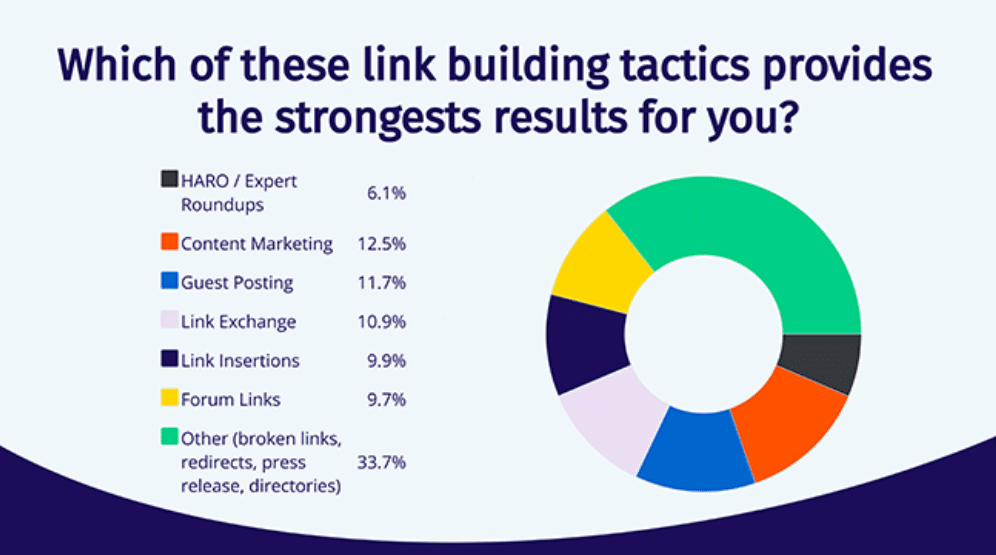
Even content marketing brings the highest results.
Source: Adam Connell
This shows how important this strategy is for link building.
#4: Partner, Supplier, and Brand Relationship Links
Your existing business relationships are the best way to bring more business. Suppliers, manufacturers, distributors, and other partners often maintain websites with partner or testimonial pages — earning links here is easier than starting from scratch. These backlinks are high-quality and also highly relevant, which makes them valuable for SEO.
Start by identifying your top suppliers or partners and see if they have a “Partners” or “Testimonials” page. Reach out and offer to provide a short testimonial, case study, or even a co-branded content piece that highlights the relationship. Many partners are happy to include a link back to your site when you offer something useful in return.
#5: Guest Posting in Ecommerce Niches
Guest posting is still one of the most reliable ways to earn high-quality backlinks, especially when done strategically. The key is to focus on websites in your niche where your insights will actually matter to their readers. This ensures that the links you earn are relevant and likely to drive real traffic.
Start by identifying blogs, magazines, or online publications related to your industry. Look for sites that publish guides, tips, or trends, rather than just accepting any guest post. When pitching, propose content ideas that are useful to their audience — educational posts, case studies, or trend analyses often perform best.
For example, if you sell eco-friendly home products, you could pitch a post on “5 Simple Ways to Make Your Home More Sustainable” with examples from your product line.
When creating the guest post, include links to your site naturally. Link to relevant category pages, high-performing product pages, or informative blog posts within your own site. Avoid over-linking or using promotional language; the goal is to provide value first, which earns the trust of both the site owner and their audience.
Plus, follow up politely after the post goes live. Share the post on your own channels, and maintain a relationship with the editor for future opportunities. Done consistently, guest posting builds a steady stream of authoritative backlinks while also increasing brand visibility and driving targeted traffic to your ecommerce store.
Conclusion
Getting good links for your online store is not difficult. You can get good results with the help of HARO or Qwoted link building. Or share your products with bloggers, make useful guides, or start working with partners. All of these are part of link building for ecommerce that actually works.
The most important part is to keep at it. Doing a little bit every week — answering queries, creating content, or reaching out to partners — can make a big difference over time. These links help people find your store, trust your brand, and can even lead to more sales.
And if you need help getting links from top media sites, reach out today. We’ll help you land links from Forbes, American Express, Business Insider, and more!
FAQs
1. What is link building for ecommerce?
Link building for ecommerce is the process of getting other websites to link to your online store. These links improve your search engine rankings, drive traffic, and increase trust in your brand. Unlike regular websites, ecommerce link building often focuses on product, category, and resource pages to attract relevant backlinks.
2. Why is link building important for online stores?
Links are one of the biggest factors Google uses to rank websites. For ecommerce stores, quality links help product and category pages appear higher in search results. They also bring new visitors who might become customers. Without link building, even the best products may stay hidden from potential buyers.
3. How can I use HARO and Qwoted for my ecommerce store?
HARO and Qwoted connect you with journalists looking for expert input. By responding to queries with valuable insights, tips, or data, you can earn backlinks to your store. Focus on relevant queries, respond quickly, and provide unique information. Linking to your homepage, category, or product pages naturally increases SEO value.
4. Can content help with ecommerce link building?
Yes! Creating helpful guides, tutorials, or resource pages can attract links from other websites. For example, a blog post on “Home Fitness Tips” can earn backlinks from health blogs or news sites. Content that solves real problems or shares original data tends to get more high-quality links naturally over time.
5. How long does it take to see results from link building?
Link building is not instant. For ecommerce stores, it usually takes a few months to see noticeable improvements in search rankings and traffic. Consistent effort — responding to queries, guest posting, and building relationships — pays off over time. High-quality links provide long-term SEO benefits, unlike quick, low-value shortcuts.