
Getting your startup noticed is tough, especially when you don’t have a big budget for PR or marketing.
That’s where HARO link building can make a real difference. Journalists are always looking for expert insights, and startups can use this chance to gain media coverage, backlinks, and credibility.
In this guide, we’ll explore how to use HARO for startups the right way, so you can boost visibility, improve SEO, and build trust without spending a fortune.
What is HARO and Why Startups Should Care?
HARO, short for Help a Reporter Out, is a platform where journalists share requests for expert insights, and sources respond with their input.
Every day, reporters from well-known media outlets post questions, and if your answer is selected, your name or company can be featured in their article.
That usually comes with a backlink to your website, which is great for SEO.
For startups, it’s a chance to stand out without spending thousands on PR agencies.
When you’re still building your brand, being mentioned on trusted websites gives you instant credibility. It tells potential customers, investors, and even partners that your business is worth paying attention to.
That’s why I believe startups should take HARO (or such platforms) more seriously, as it’s one of the easiest ways to get noticed in a crowded market.
Step-by-Step: How to Use HARO for Startups
Getting started with HARO may look confusing at first, but once you know the steps, it becomes a simple routine. Here’s how we approach it on behalf of our clients, (which gives us great results), so you can make sure your startup gets the most out of it.
1. Create Your Free Account
Credit: HARO
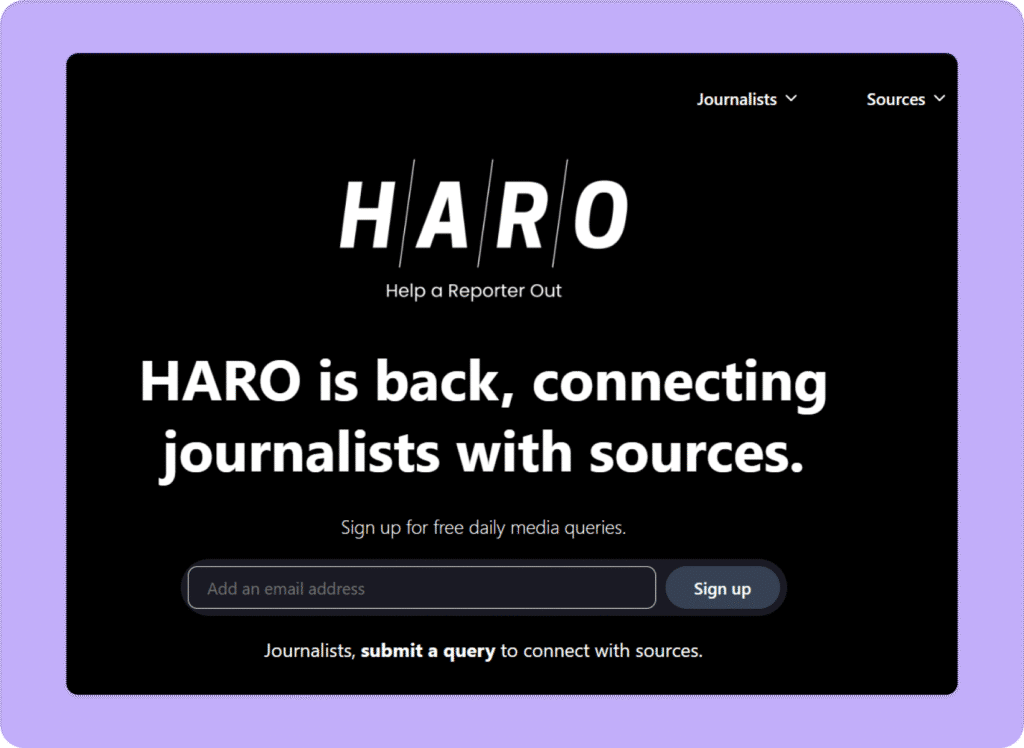
Go to helpareporter.com and sign up. It was discontinued earlier, but after Featured acquired it, HARO is back to its original, simple format. You just give your name, email, and area of expertise. No complicated dashboards or paywalls for basic users.
2. Get the Right Queries in Your Inbox
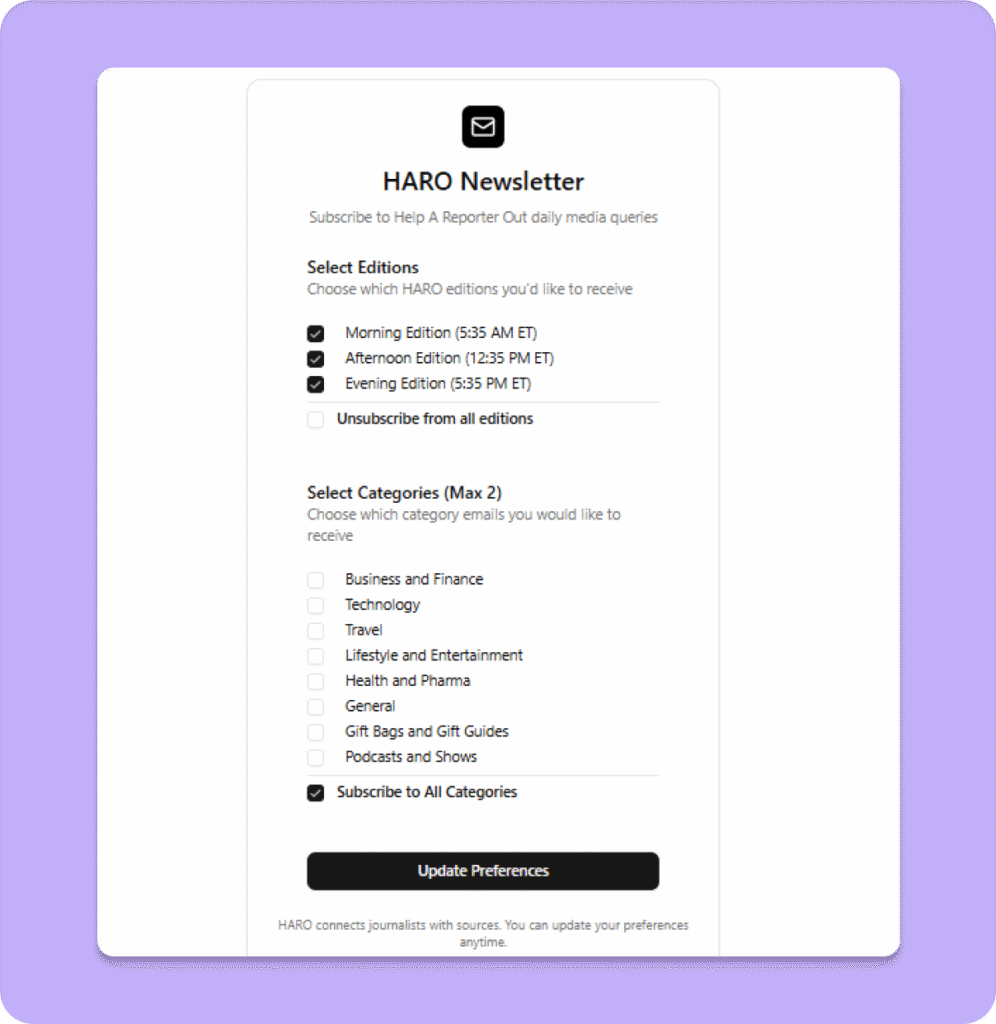
HARO sends three email digests every weekday, packed with journalist requests across dozens of topics. The trick is to make sure you only see the ones that matter to you. During signup, HARO lets you select the categories that match your expertise—like business, tech, lifestyle, health, or finance—so you don’t get buried in irrelevant queries. Choosing the right categories keeps your inbox clean, helps you focus on opportunities where your input adds real value, and increases your chances of getting quoted. By filtering upfront, you save time, reduce overwhelm, and ensure that every pitch you send has a higher likelihood of success.
3. Check Digests Consistently
Media opportunities move fast. The strongest ones usually get flooded within minutes, not hours. Set a daily routine or an alarm so every new batch gets your attention the moment it lands in your inbox. Treat each digest like a time-sensitive lead. Missing even one could mean skipping a story that perfectly aligned with your expertise and could’ve earned you a solid backlink.
4. Write Clear, Helpful Responses
Your pitch should make a journalist’s job easier. Start with a quick intro that proves you’re relevant to the topic. Add one sharp line about your authority—numbers, experience, or a niche angle. Then give them a clear, practical answer they can copy-paste into their story. Skip the fluff, inspirational quotes, and self-promo. The new HARO/Qwoted moderation filters aggressively reject anything that looks automated or generic, so your response needs to feel human, specific, and genuinely useful.
5. Reply Quickly, but with Quality
Timing still plays a big role. Many reporters work on same-day or next-day deadlines. The earlier you respond with a strong, relevant quote, the more likely you get noticed before their draft is locked in. That said, rushing out half-baked answers won’t help. Take a few extra seconds to ensure your response is polished, factual, and aligned with their question.
6. Share and Leverage Every Win
Every media mention is an asset—treat it like one. Post it on LinkedIn, drop it in your newsletter, add it to your About page, and keep a running “As Seen In” section. Each feature boosts your credibility and compounds your brand authority. Plus, those high-quality backlinks strengthen your domain over time, improving your SEO and helping future content rank faster.
7. Respect the Platform
Journalists and platforms are cracking down harder than ever on spam, templated pitches, and off-topic submissions. If you send irrelevant or low-effort responses, you can get flagged, throttled, or permanently removed. Approach each query professionally. Read the prompt properly, offer value, and keep your tone respectful. HARO/Qwoted reward consistency—good contributors become the people journalists recognize and quote repeatedly.
SEO Benefits of Using HARO
One of the biggest reasons we use HARO is for the SEO value it brings. Every time a journalist includes your input in their article, they usually link back to your website. These backlinks act like votes of confidence in the eyes of search engines.
Now you could say that, ‘alright, fine, I could get a bunch of backlinks by paying to an SEO guy’, yes… you’re right, but there’s more to it.
You see, with HARO, the backlinks you get are ‘branded’. Your domain is often linked, alongside your name. That builds a lot of credibility for startups.
In the age of AI, you need a lot of credibility in the eyes of Google, so they can consider you a worthy domain to rank in organic search results… and their AI overviews. A study by Ahrefs shows that branded mentions, whether linked or not, play a huge role in getting featured in AI overviews, which is you know the “future of web”, if we’d like to call it that.

Credit: Ahrefs
When high-authority websites link to you, your site’s credibility grows, and that can help improve your rankings. For a startup trying to build visibility online, that kind of boost is hard to ignore.
Another benefit is how these mentions increase brand awareness in search results. When people look up your company, they don’t just find your website—they also come across articles and features where your name appears. This builds trust faster, because your brand is seen on platforms people already recognize and respect.
There’s also the indirect traffic. Readers who come across your mention in an article might click through to your site out of curiosity. Even if they’re not ready to buy yet, they’ve discovered your business, and that’s the start of a valuable connection. From my own experience, some of our best leads came from people who first found us through a HARO feature.
Mistakes to Avoid with HARO Link Building
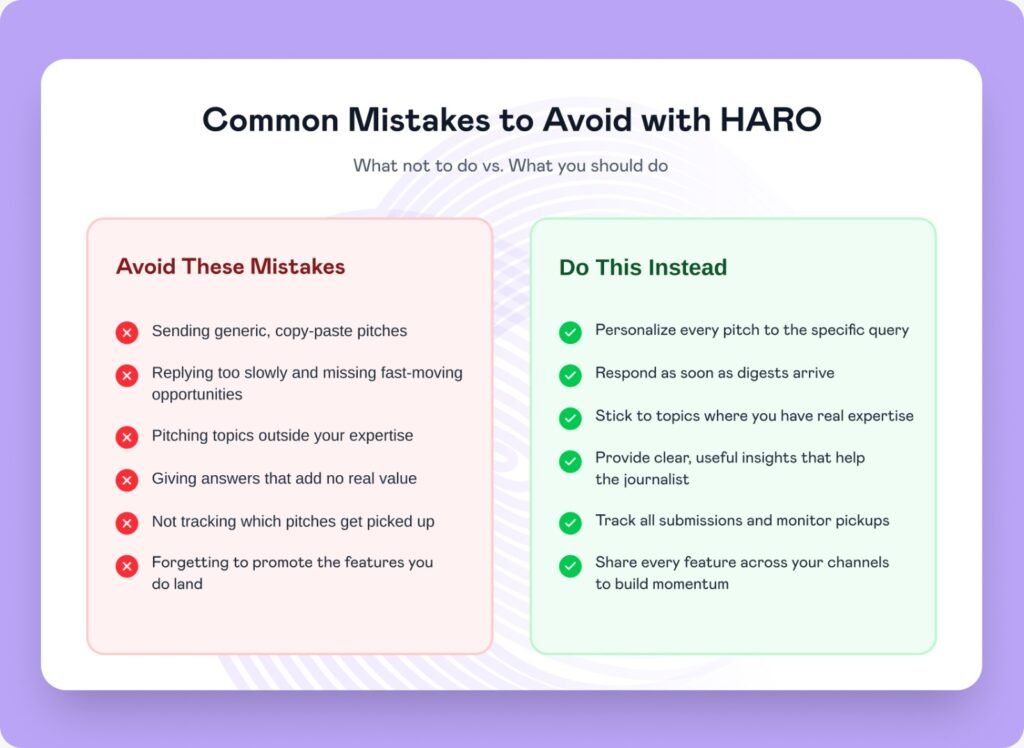
While HARO can be a powerful tool, many startups don’t see results because they fall into a few common traps. Knowing what not to do can save time and improve your chances of getting featured.
One mistake is sending the same generic response to every query. Journalists can spot a copy-paste pitch instantly, and it usually ends up being ignored. Instead, tailor each response to the specific question being asked. Even a short, thoughtful answer stands out more than a long, recycled one.
Another issue is being slow to reply. HARO moves quickly, and if you wait too long, the journalist may already have the quotes they need. I’ve lost opportunities in the past simply because I thought I could come back to it later. Acting fast makes a real difference.
Some startups also pitch outside of their expertise. This might seem harmless, but it hurts credibility. If your answer doesn’t add value, it won’t be chosen, and it could even make you look unprofessional. Focus only on queries where you can genuinely contribute.
Plus, many people forget to track the results of their efforts. If you don’t know which pitches got picked up, you miss the chance to share and promote those mentions. Celebrating these wins not only boosts your startup’s visibility but also builds momentum for future media outreach.
Conclusion
Learning how to use HARO for startups can open doors to media coverage, backlinks, and stronger brand visibility without draining your budget.
Combined with programs like Hero For Startups, it’s a smart way to grow both online authority and real-world opportunities. The key is consistency—show up, share your expertise, and make the most of every chance you get.
Looking to grow your reach? HARO is a simple place to begin building trust and exposure. Get in touch with us today, and let’s move your startup forward.
FAQs
How does HARO work?
HARO, short for Help a Reporter Out, is a platform that connects journalists with experts. Reporters post questions when they need insights for their articles, and experts can reply with their knowledge. If your response is chosen, your input may appear in the final story—often with a mention and a backlink to your business.
Is HARO free to use?
Yes, HARO offers a free version where you can receive daily emails with media queries. There are also paid plans that give extra features, but signing up and getting started doesn’t cost anything.
What is the purpose of HARO?
The goal of HARO is to make it easier for journalists to find reliable sources. At the same time, it helps businesses and individuals get featured in media outlets by sharing their expertise. It’s a win-win for both sides—reporters get expert input, and startups or professionals gain visibility.
Is HARO good for SEO?
Absolutely. When your response gets published, it often includes a backlink from a trusted website. These high-quality backlinks can improve your search engine rankings, bring more traffic to your site, and position your business as an authority in your field.
What is the best time to respond to HARO?
The sooner, the better. Journalists usually work with tight deadlines, so replying quickly increases your chances of being selected. Ideally, check HARO emails as soon as they arrive and respond right away if the query matches your expertise.