
Everybody wants the number. Fifty? A hundred? The honest answer is that there isn’t one, and anyone who gives you a fixed figure is selling something. But that’s a frustrating answer on its own, so let’s do better than “it depends” and actually work out what decides it.
Because there is a real way to figure out how many backlinks you need. It’s just not a universal number, it’s a number specific to the keyword you’re chasing, and you can find it yourself in about twenty minutes. This is how it actually works.
Why There’s No Magic Number
The number of backlinks you need depends entirely on what you’re trying to rank for, because ranking is a competition, not a threshold. You’re not clearing a bar Google set, you’re beating the specific pages already ranking for your keyword. If they have few links, you need few. If they have hundreds, you need to compete with hundreds.
So “how many backlinks do I need” is really “how many do the current top results have, and how good are they.” A low-competition keyword might rank with a handful of decent links, while a competitive commercial term could need dozens of strong ones.
The Part That Matters More Than Quantity
Here’s what the “how many” question misses completely… link quality swamps link quantity. Ten strong, relevant links from trusted sites in your industry beat a hundred weak links from random directories, and it’s not close.
Backlinko’s analysis of millions of search results found that the number one result tends to have far more quality backlinks than positions below it, but the operative word is quality.
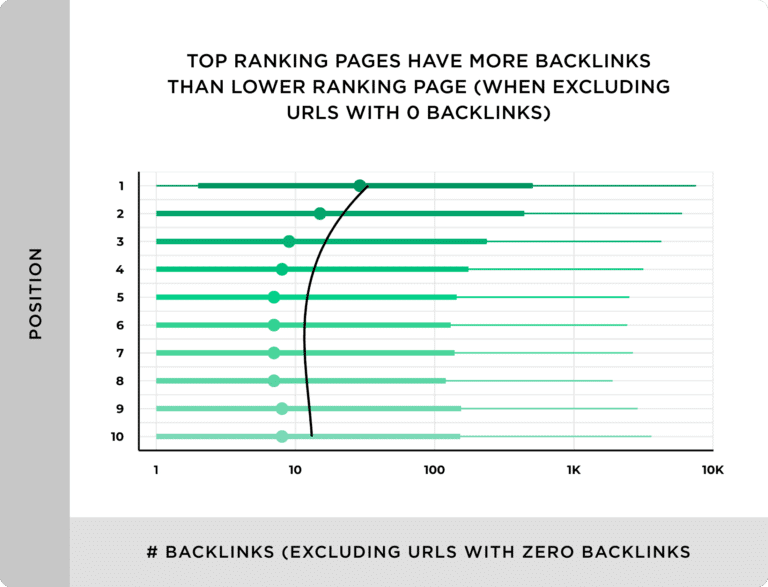
Source: Backlinko
The pages winning aren’t the ones with the most links, they’re the ones with the most links from sites that matter. A single link from a respected industry publication can outweigh fifty from forgettable blogs.
This is why counting links is such a misleading habit. Two sites can have the same number of backlinks and rank completely differently, because one has links that carry weight and the other has links that carry nothing. If you only track the count, you’re measuring the thing that matters least.
How to Find Your Actual Number
Instead of guessing, look at the competition directly. This is the method that replaces the magic number with a real target.
Take the keyword you want to rank for and search it. Look at the pages currently in the top five, since those are the ones you actually have to beat. Put their URLs into any backlink tool and check two things for each: how many referring domains point to that specific page, and how strong those domains are.
Now you have a real target. If the top pages have around fifteen referring domains each, that’s roughly your goal, matched or beaten in quality. If they have two hundred, you’ve learned this keyword is expensive and maybe not worth chasing yet. This twenty-minute check tells you more than any general “you need X links” article ever could, because it’s based on your keyword, not an average.
Why Fewer, Better Links Usually Win
Once you see the competition clearly, a smarter strategy appears. Instead of racing to hit a link count, focus on earning the specific kinds of links the winning pages have. That usually means fewer links than you feared, but better ones, from relevant, trusted sources. Earning editorial links through HARO is a good example, since a handful of quotes in real publications can outweigh months of low-value link building.
There’s also the topical relevance factor, which pure counting ignores entirely. A link from a site in your industry tells Google far more about what you’re relevant for than a link from an unrelated high-authority site. Ten relevant links can beat fifty random ones not because of the count, but because they point Google toward the exact topic you want to rank for.
So the real target isn’t a number of links, it’s a quality and relevance level that matches or beats the current winners. Hit that, and the count sorts itself out, usually at a lower number than the “how many” question assumes.
What Else Decides Whether You Rank
Worth being honest about one more thing: backlinks aren’t the only factor, and treating them as the whole game leads to disappointment. You can build exactly the right links and still not rank if other pieces are missing.
Your content has to actually match what the searcher wants, your site needs to be technically sound, and the page has to be at least as useful as what’s already ranking. Links are often the deciding factor between similar pages, but they can’t rescue a page that doesn’t deserve to rank on its other merits. This is why a balanced approach, like the mix in affordable SEO for small businesses, treats links as one important part of the picture instead of the entire strategy.
There is also the question of your existing links doing their job. Before chasing new ones, it is worth earning a few free backlinks from easy, legitimate sources, since those often close a small gap with competitors faster and cheaper than a full campaign, especially on lower-competition keywords.
So before you obsess over link count, make sure the page itself earns the right to compete. Then links become the edge that pushes you past close competitors, which is exactly what they’re best at.
The Bottom Line
How many backlinks do you need to rank? Enough to match or beat the quality and relevance of the pages currently ranking for your specific keyword, which you can find in twenty minutes by checking their profiles directly. For easy keywords that might be a handful. For competitive ones, dozens of strong links. There’s no universal figure because ranking is always relative to your competition.
The bigger lesson is to stop counting and start comparing. The link count on its own tells you almost nothing, while the quality, relevance, and strength of your links compared to the current winners tells you everything. Chase the right links for your specific target instead of a number from a blog post, and you’ll usually find you need fewer than you feared, as long as the ones you get actually matter.
FAQs
1. How many backlinks do I need to rank on the first page?
Enough to match or beat the pages currently ranking for your keyword. Check the top five results in a backlink tool, note how many quality referring domains each has, and use that as your target. For easy keywords it may be a handful; for competitive ones, dozens.
2. Is it better to have more backlinks or higher quality ones?
Quality, clearly. Ten strong, relevant links from trusted industry sites beat a hundred weak links from random directories. Two sites with identical link counts can rank completely differently based on link quality alone, which is why counting links without judging their strength is misleading.
3. Can I rank with no backlinks at all?
Sometimes, for very low-competition or highly specific keywords where the ranking pages also have few links. But for anything competitive, you’ll need backlinks to compete, since the current winners have them. Check your keyword’s top results to see what you’re actually up against.
4. How do I know how many links my competitors have?
Search your target keyword, take the URLs of the top few results, and run them through a backlink tool. Look at referring domains to each specific page, not just the whole site, and note the quality of those domains. That gives you a realistic target for your own page.
5. Do backlinks alone guarantee I’ll rank?
No. Links are often the deciding factor between similar pages, but they can’t rescue a page with weak content, poor search intent match, or technical problems. Make sure the page deserves to compete on its own merits first, then use quality links to push past close competitors.