
People don’t scroll through links anymore. They ask a question and get a direct answer from AI. That answer is built by pulling and summarizing content from different sources. If your content isn’t included, you lose visibility.
Generative Engine Optimization (GEO) focuses on making your content clear, structured, and trustworthy so AI systems can use it in their responses. Rankings still matter, but being part of the answer matters more.
This guide shows how AI search works, what drives visibility now, and how to create content that gets picked and used in 2026.
What is Generative Engine Optimization (GEO)?
Generative Engine Optimization (GEO) means shaping your content so AI search tools can understand it, trust it, and actually use it in their answers. Instead of just trying to rank on Google, the focus is on getting your content picked as a source inside AI-generated responses.
This shift is already happening. Data shows that between Q3 and Q4 2024, AI Overviews grew by 8.83 percentage points in search results.
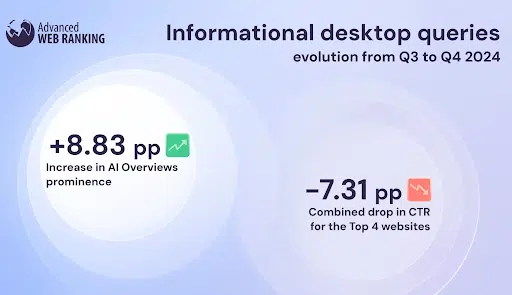
Source: Digital Information World
At the same time, click-through rates for the top 4 websites dropped by 7.31 points.
So AI answers are taking up more space, and fewer people are clicking on websites. More users are getting what they need directly from tools like ChatGPT.
Because of this, businesses are putting more focus on clear, useful content that AI can easily pick. Ranking still matters, but now the real win is getting your content included in the answer itself.
How AI and Generative Search Engines Rank and Select Content
AI search engines don’t “rank pages” the way traditional search engines do. They scan multiple sources, extract useful parts, and combine them into a single answer. Your goal is not just to appear on a results page, but to be included in that final response. Here’s what actually drives that selection.
Relevance to the Query
AI systems look for content that directly answers the user’s question without forcing them to dig. Pages that clearly match the intent behind a query are far more likely to be used.
For example, if someone searches for a definition or a step-by-step process, content that delivers a straight answer early performs better than content that takes too long to get to the point. Matching intent matters more than repeating keywords.
Clarity and Structure
Content that is easy to read is also easy to extract. AI tools prefer well-organized pages with clear headings, short paragraphs, and logical flow. When information is broken into sections, lists, or steps, it becomes easier for systems to identify and reuse specific parts.
Messy formatting, long blocks of text, and unclear structure reduce your chances because the system has to work harder to understand what you’re saying.
Authority and Trust Signals
AI models are trained to favor information that appears reliable and consistent across sources. Content backed by real expertise, clear authorship, and a strong presence across the web is more likely to be selected. Mentions on reputable sites, consistent branding, and accurate information all contribute to trust.
If similar points are supported by multiple credible sources, the chances of your content being included increase.
Freshness and Updates
For topics that change often, AI systems tend to prefer updated content. This does not mean every article needs constant edits, but important pages should reflect current information.
Outdated examples, old data, or irrelevant references reduce the likelihood of being selected. Keeping content fresh signals that it is still useful and aligned with what users are looking for right now.
Consistency Across Sources
AI-generated answers are often built by combining information from different places. When your content aligns with widely accepted facts and matches what other trusted sources are saying, it becomes easier to include.
If your content strongly contradicts common understanding without clear proof, it is less likely to be used. Consistency helps AI systems feel confident in selecting and presenting your information.
How to Optimize for AI Citations and Mentions
Getting cited by AI tools is about being clear, useful, and trusted. Here are five ways to improve your chances.
Give Direct, Clear Answers
Start by answering the question early in your content. Don’t make the reader scroll to find the point. AI tools look for clean, direct responses they can lift and reuse. Keep sentences simple, avoid filler, and focus on clarity. If your answer is easy to extract, it becomes easier to include in generated responses.
Structure Content for Easy Extraction
Break your content into sections with clear headings. Use short paragraphs, bullet points, and step-by-step formats where needed. This makes it easier for AI systems to scan and pull specific parts. A messy page with long blocks of text is harder to process, which lowers your chances of being selected.
Build Real Authority Around Topics
Cover topics in depth instead of writing surface-level content. When you consistently publish useful content around one area, it builds trust over time. AI tools prefer sources that show expertise and consistency. Mentions on other websites and a strong presence across platforms also improve your credibility.
Add Unique Insights and Data
Generic content blends in and gets ignored. If you include original insights, simple data points, or real examples, your content stands out. AI tools look for information that adds value, not repeats what’s already everywhere. Even small observations from real experience can increase your chances of being cited.
Keep Content Updated and Relevant
Review and update your important pages regularly. Remove outdated information and add current examples where needed. AI systems prefer content that reflects what’s relevant right now. Fresh content signals that your page is still useful, which improves the chances of it being selected and used in answers.
GEO for Different Content Types
Generative Engine Optimization works differently depending on the type of content you create. Here’s the GEO for different content types.
Blog Content
Blog posts are the backbone of GEO. They should be well-structured, easy to scan, and focused on answering specific questions. Use clear headings, short paragraphs, and direct explanations. Add examples where possible. The more your blog feels like a ready-made answer, the higher the chance AI will pull from it.
Landing Pages
Landing pages should clearly explain one offer or idea without distraction. Focus on clarity and strong messaging. AI tools often pick clean, focused pages that quickly explain value. Avoid clutter and keep the structure simple so the main message is easy to identify and reuse.
Product or Service Pages
These pages should clearly describe what you offer, who it’s for, and why it matters. Include key features, benefits, and use cases in a simple format. AI systems look for pages that clearly define value. The easier it is to understand your offering, the more likely it is to be referenced.
FAQ Content
FAQ sections are highly useful for GEO because they directly match how people ask questions. Each answer should be short, clear, and complete. Avoid vague responses. Well-written FAQs are often picked up directly by AI because they mirror natural search queries and provide quick answers.
Video and Multimedia Content
Even though AI doesn’t “read” videos the same way, it can use transcripts and supporting text. Always include written summaries, captions, or descriptions. This helps AI understand the content and increases the chances of it being used or cited in responses. Written context makes multimedia content more accessible.
Mistakes to Avoid in GEO
Here are the mistakes to avoid.
Writing Long Content Without Clear Answers
A lot of content looks detailed but never gives a straight answer. People don’t want to search inside your article to find the point, and AI works the same way. If your main answer is buried deep or explained in a confusing way, it gets ignored. Start strong, give a clear answer early, and then expand on it. This makes your content easier to understand and easier to pick.
Making Content Messy & Hard to Scan
Content that is hard to read usually gets skipped. Large paragraphs, no headings, and poor formatting make it difficult for both users and AI to follow. When your ideas are not clearly separated, it becomes harder to extract useful information. Break your content into sections, use simple headings, and keep paragraphs short. Clean structure improves readability and increases your chances of being selected.
Publishing Generic Content That Says Nothing New
Content that repeats the same points as everyone else doesn’t stand out. AI tools look for useful and clear information, not just more of the same. If your content feels copy-paste or too basic, it won’t be picked. Add your own insights, simple examples, or clearer explanations. Even small differences can make your content more valuable and worth using.
Wrap UP
Search is already moving in a new direction. People want quick, clear answers, and AI tools are built to give them exactly that. If your content is not easy to understand or doesn’t directly help, it simply gets ignored.
GEO doing the basics properly — being clear, useful, and consistent. When your content answers real questions in a simple way and is structured well, it naturally becomes easier to pick and use. So focus on making your content worth choosing. That’s what keeps you visible now.
But if you need help getting your brand shows in AI answers, contact us today.
FAQs
1. What is Generative Engine Optimization (GEO)?
Generative Engine Optimization (GEO) is about creating content that AI tools can easily understand and use in their answers. Instead of only trying to rank on search engines, the goal is to make your content clear, structured, and useful so it gets selected and included in AI-generated responses.
2. How is GEO different from traditional SEO?
SEO focuses on ranking higher in search results, while GEO focuses on getting your content used inside AI answers. With SEO, clicks are the goal. With GEO, visibility inside the answer matters more. Both are important, but GEO requires clearer content, better structure, and stronger authority signals.
3. Why is GEO important in 2026?
More people are using AI tools to get direct answers instead of clicking multiple links. This means fewer visits to websites. GEO helps you stay visible by making sure your content is part of those answers. Without it, even well-ranked content can lose attention and traffic over time.
4. What type of content works best for GEO?
Content that is clear, structured, and focused on answering specific questions works best. Blog posts, FAQs, and guides perform well because they are easy to break down and extract from. Simple language, short sections, and direct answers increase the chances of your content being used.
5. How can I improve my chances of being cited by AI?
Focus on giving clear answers, organizing your content well, and adding useful insights. Keep your content updated and make sure it reflects real expertise. Avoid fluff and make every section meaningful. The easier your content is to understand and trust, the higher the chances of it being picked.