Your rankings held. Your content is fine. And your traffic still dropped. If that sounds like your last few months, you’re not imagining it, and you didn’t do anything wrong. The way people use Google changed, and a lot of the visits you used to earn now never happen at all.
The reason has a name: zero-click search. It means someone searches, gets their answer right there on the results page, and never clicks through to any website. It’s happening on a huge share of searches now, and understanding it is the difference between reacting sensibly and panicking over the wrong thing.
What Zero-Click Search Actually Means
A zero-click search is any search that ends without the person visiting a website. They typed a question, Google showed the answer directly, and that was enough. No click, no visit, no traffic for the site that originally published that information.
This isn’t entirely new. Google has answered simple questions like weather, sports scores, and definitions on the results page for years. What changed is the scale. AI Overviews, the generated answers now sitting at the top of many results, handle far more complex questions than a weather box ever did, and they pull from the same content that used to earn you clicks.
So the deal that powered SEO for two decades shifted. You publish, you rank, you get visits. Now you publish, you rank, and Google may answer the question for you without sending anyone over. That’s the shift behind most of the traffic drops people are seeing.
How Big Is This Really?
Big enough to explain real declines. Research found that around 68% of US Google searches now end without a click.
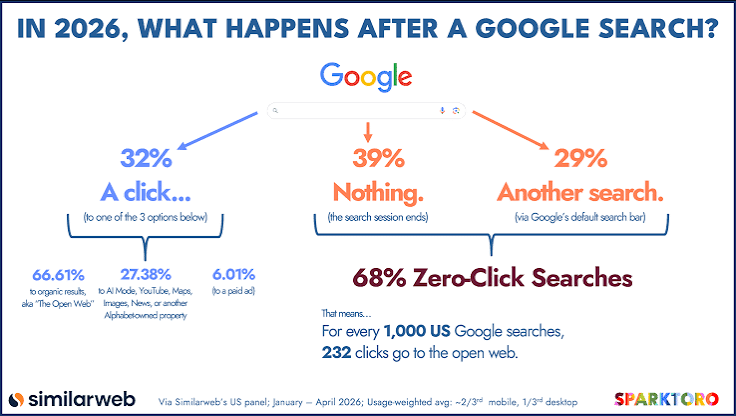
Source: Reddit
Out of every thousand searches, only a few hundred clicks reach the open web, and that number has been falling steadily.
The main driver is AI Overviews. When one of those generated answers appears above the results, the top organic link loses a large share of its clicks, because the searcher already got what they came for. You can hold the number one spot and still watch most of the reward go to the answer box sitting above you.
This is why checking your rankings can be misleading right now. Your positions might look stable while your traffic falls, because the problem isn’t where you rank. It’s that ranking sends fewer people than it used to.
Which Pages Lose the Most
The damage isn’t spread evenly, and knowing where it lands helps you respond. Informational content takes the hardest hit, because those are exactly the questions AI answers well. “What is X,” “how do I do Y,” “why does Z happen” are the searches most likely to get answered on the page.
Meanwhile, three types of search still send clicks reliably. Commercial searches, where someone is comparing or ready to buy, still lead to visits because people want to check details before spending money. Local searches, where the answer is a visit or a call. And branded searches, where someone is looking for you specifically. Notice that none of those three are questions an AI can simply answer and close, which is exactly why the clicks survive there.
So if your traffic loss is concentrated in top-of-funnel blog posts, that’s the zero-click effect. If your commercial and branded pages are still performing, your business isn’t in trouble, your traffic mix is just changing. This is also why PR-driven link building has become more valuable, since brand recognition drives the branded searches that still convert.
Why This Isn’t the Disaster It Looks Like
Here’s the part that gets lost in the panic. Search itself isn’t shrinking. People are searching more than ever, they’re just clicking less, because more answers live on the results page. The attention is still there, it’s the click that moved.
And the AI answers everyone worries about? They’re built from content that ranks well and brands the web already trusts. When an AI Overview cites sources, or when someone asks ChatGPT for a recommendation, the answer comes from sites with strong authority and coverage. In other words, the same things good SEO always built still decide who shows up, just in a new format.
So the value of being visible didn’t fall. What fell was the assumption that visibility always turns into a click. Those are two different things now, and separating them is the whole key to responding well.
What to Do About It
First, change what you measure. Traffic alone will make you cut things that are actually working. Start tracking branded search volume, whether AI tools mention your brand, and conversions from search instead of raw sessions. A page can influence a sale through an AI answer while its visit count stays flat.
Second, shift some effort toward the searches that still click. Comparison pages, pricing pages, and product content deserve more attention now, because that’s where visits still turn into customers.
Third, build the brand signals that both Google and AI systems reward. Getting mentioned across trusted publications feeds the recognition that drives branded search and gets you cited inside AI answers. Earning free backlinks and mentions through genuine coverage does double duty here, since it helps rankings and brand recall at the same time.
Fourth, keep publishing informational content, but give it a new job. Instead of measuring it by traffic, measure it by whether it earns citations, builds authority, and plants your brand for the branded searches that come later. A post that never gets a click but gets your brand named in an AI answer is doing real work, even if your old dashboard calls it a failure.
Where This Leaves You
Zero-click search is real, it explains most of the traffic declines people are seeing, and it isn’t going away. But it’s a change in how attention flows, not the end of search, and treating it like the end leads to exactly the wrong moves, like cutting content that’s building your brand.
The businesses that come out ahead are the ones that stop worshipping traffic and start building recognition, since recognition is what feeds every channel that still works. Traffic was always a means to an end. The end, being the trusted answer people and machines reach for, is still completely within reach for anyone doing patient, quality SEO and outreach work. Measure the right things, protect the searches that convert, and the falling traffic number stops being the story.
FAQs
1. Why is my website traffic falling even though my rankings are stable?
Because ranking now sends fewer clicks than it used to. When AI Overviews and answer boxes handle the question on the results page, people get what they need without visiting your site. Your position can stay the same while the traffic that position earns keeps shrinking.
2. What is a zero-click search?
It’s a search that ends without the person visiting any website. They get their answer directly from Google, through an AI Overview, a featured snippet, or an answer box, and never click through. Around 68% of US searches now end this way, according to 2026 research.
3. Which pages are most affected by zero-click search?
Informational content suffers most, since AI answers handle definitions, how-tos, and explainers well. Commercial pages, local searches, and branded searches still send clicks reliably, because people want to verify details before buying, visiting, or when they’re looking for a specific company.
4. Should I stop publishing blog content because of this?
No, but change how you judge it. Generic informational posts that only chased traffic make less sense now. Content with original data, real expertise, and a clear brand angle still earns citations, builds authority, and plants your name for the branded searches that convert later.
5. How do I measure success if traffic keeps dropping?
Track branded search volume, conversions from organic search, and whether AI tools name your brand when asked about your category. Falling sessions alongside steady revenue and rising branded demand means your visibility is working, just without the click it used to produce.