
Every link builder with commercial pages eventually hits the same wall. The pages that make money, category pages, service pages, product listings, are the ones nobody wants to link to. The pages people happily link to are blog posts that make no money at all.
So where should the links go? Most advice picks a side. The honest answer is that it’s the wrong question, because the two page types play different roles in how authority moves through your site, and the best-performing sites use both roles intentionally.
So let’s cover when to build links to category pages directly, when to route authority through content instead, and how to read your own search results to decide.
Why This Trade-Off Exists at All
Links are earned by giving people a reason to reference you, and category pages offer none. A grid of products or a list of services helps a buyer, but no journalist cites it, no blogger recommends it to readers, and no resource page includes it. Its job is conversion, and conversion isn’t referenceable.
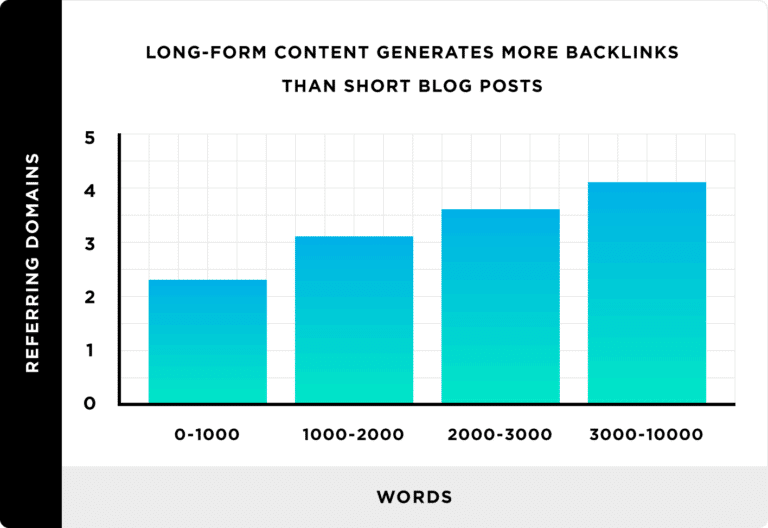
Blog content faces the opposite situation. Research-driven, in-depth posts give writers something to point at. Backlinko’s analysis of over 900 million articles found that long-form content earns 77.2% more backlinks than short posts, because in-depth pieces become the reference other writers cite.
Source: Backlinko
Links flow naturally toward information and away from transactions.
The Case for Building Links to Category Pages
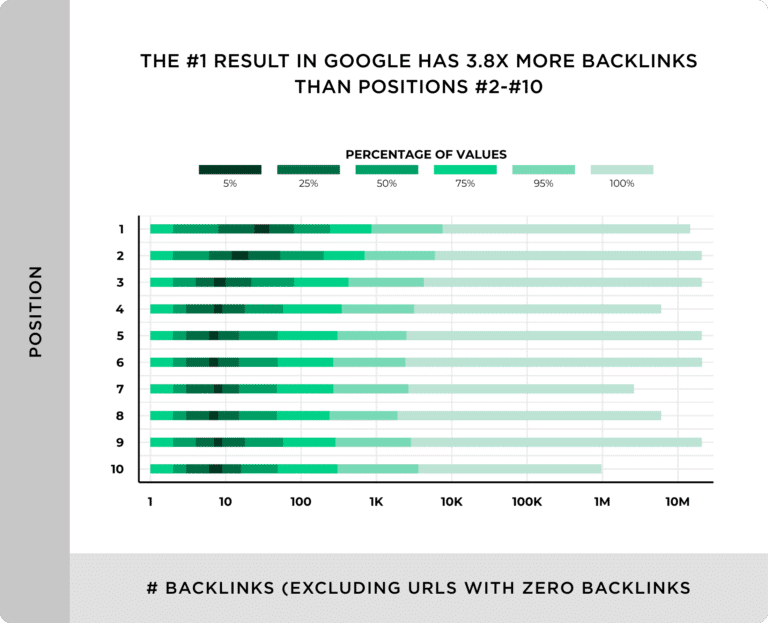
Commercial keywords are usually the hardest ones you target, and hard keywords demand authority. Backlinko’s study of 11.8 million search results found the #1 result has 3.8 times more backlinks than positions 2 through 10.
Source: Backlinko
If your category page competes against rivals whose equivalent pages carry strong link profiles, internal authority alone rarely closes that distance.
Direct links to category pages are worth pursuing when the SERP proves they’re needed. Search your commercial keyword and study what ranks. If competitor category pages sit in the top five with dozens of referring domains each, that’s your benchmark, and pretending otherwise wastes a year.
The legitimate ways to earn them are narrower but real. Supplier and partner pages linking to the categories they appear in. Industry directories that actually get used. Digital PR campaigns where the story naturally involves the category, like pricing data or market trends drawn from it. Unlinked brand mentions where an editor already named your product range and a polite request adds the link. What doesn’t belong on that list is buying keyword-anchored guest post links straight to money pages, which is the single most common pattern in penalized profiles.
The Case for the Blog-First Model
A blog-first approach works because it helps you earn links naturally and use them to strengthen the pages that matter most. Instead of trying to get backlinks directly to your category or service pages, you create useful blog posts that other websites actually want to reference.
Once those blog posts earn backlinks, you can use internal links to pass authority to your important product, category, or service pages. This helps search engines understand which pages you want to rank while giving visitors an easy path to explore your website.
This approach fits how link building works in the real world. Journalists, bloggers, and industry websites are much more likely to link to a helpful guide, original research, or expert advice than to a sales page. That’s why your blog becomes the starting point for earning backlinks.
To make this strategy work, every blog post should have a clear purpose. Link it to the most relevant commercial pages using descriptive anchor text, not generic phrases like “click here” or “read more.” When your blog and commercial pages work together, the authority your content earns benefits your entire website.
How to Decide for Your Site
Skip the ideology and run three checks.
- Check the SERP first. For each commercial keyword, note what page type ranks and how many referring domains those pages hold. Category pages ranking with heavy profiles mean you need direct links plus internal support. SERPs mixing in guides and comparison content mean content can rank for the term itself, and the blog-first route gets you there faster.
- Audit your current shape. Pull your own link data and see where your links already point. Most sites discover 80% of their authority sits on the homepage and old blog posts while commercial pages starve. That’s not a link building problem yet. It’s an internal linking problem you can fix this week for free, and reviewing the backlinks you already have usually reveals more routable authority than a quarter of outreach would earn.
- Match tactics to targets. Earned media and content campaigns point at blog assets. Partner links, unlinked mention reclamation, and genuinely relevant directories point at categories. Forcing a tactic at the wrong page type is where budgets disappear without a trace.
A Realistic 90-Day Sequence
If you want this as a plan instead of a philosophy, the sequence looks like this.
Spend the first month on the free wins — audit where your existing authority sits, add descriptive internal links from your strongest pages into your priority categories, and reclaim any unlinked brand mentions you find.
Month two, publish or upgrade one genuinely linkable asset per priority category and point outreach at those assets, not at the categories.
Month three, review the SERPs again and build links to category pages directly only where competitor page-level profiles prove it’s required, using partners, relevant directories, and PR coverage as the sources.
Most sites see commercial pages move during month one, before a single new link lands, because routing existing authority was the bottleneck all along.
Wrapping Up
The real question isn’t whether category pages or blog posts are better. The best strategy is to use both together. Create helpful content to earn backlinks, then use internal links to pass that authority to your category or service pages. If a category page needs direct backlinks to compete, build links only when it makes sense.
Businesses that follow this approach often find they don’t need as many backlinks as they thought. In many cases, they were already earning valuable links, but those links weren’t helping their most important pages. Once the authority flows to the right places, the whole website performs better.
FAQs
1. Can category pages rank without any direct backlinks?
Yes, in low to medium competition, if the domain has authority and internal linking channels it properly. Plenty of category pages rank on the strength of site-wide trust plus descriptive internal anchors. In competitive commercial SERPs where rivals hold strong page-level profiles, direct links usually become necessary.
2. Is it safe to build links to category pages?
Safe when the links come from genuinely relevant sources with natural anchors… partners, suppliers, real directories, reclaimed brand mentions, and PR coverage that involves the category. Risky when it’s paid guest posts with commercial anchors at scale, which is the most recognizable spam pattern Google has.
3. What anchor text should internal links to category pages use?
Descriptive, keyword-relevant anchors are fine and effective for internal links, because you control your own site and Google expects careful navigation. Vary the wording naturally across pages instead of repeating one exact phrase fifty times, and make sure the anchor honestly describes the target page.
4. How many supporting blog posts does one category page need?
Three to five strong, genuinely useful posts per priority category is a realistic starting cluster. But make sure each post targets a related query people search, earns or deserves links on its own, and links to the category page with a descriptive anchor.
5. Should new sites start with category links or content links?
Content first, almost always. New domains lack the trust that makes direct commercial links look plausible, and they need the topical authority that content clusters build. Once the site earns rankings and a natural profile, adding selective direct links to key categories becomes both safer and more effective.