People are no longer opening multiple links and comparing websites. They ask a question and get a direct answer, often without clicking anything. This shift is changing how content gets seen, and more importantly, how it gets used.
Traditional SEO still focuses on ranking higher on search results. That approach still brings traffic, especially when people are ready to buy or take action. But AI-driven search is creating a different layer where content is selected, summarized, and shown as the final answer. If your content is not part of that process, it misses a large share of visibility.
That’s why comparison between AI SEO vs traditional SEO matters now. So let’s understand how they differ, where they overlap, and how to use both together is what helps you stay visible in 2026.
What is Traditional SEO?
Traditional SEO is the process of optimizing your website to rank higher on search engines like Google. It focuses on things like keywords, backlinks, technical setup, and content quality. In simple words, show up on the first page so people click your link and visit your site. This model has worked for years and still drives a large share of traffic, especially for buying intent and local searches.
From a market perspective, traditional SEO is still massive. The global SEO services market is around $108 billion, making it one of the largest segments in digital marketing today.
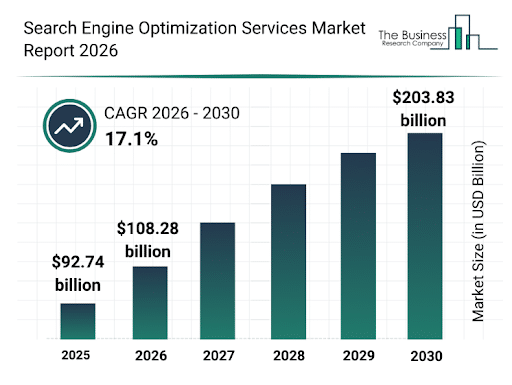
Source: The Business Research Company
Businesses continue to invest heavily because search traffic converts well, especially for commercial queries. Even with AI growing fast, traditional SEO is expected to keep expanding in absolute value, reaching even higher numbers by 2030, although its share of total search visibility is slowly shrinking.
What is AI SEO (Generative Engine Optimization)?
AI SEO, also called Generative Engine Optimization (GEO), is about optimizing content so AI tools can pick it, summarize it, and include it in their answers. Instead of focusing only on rankings, the goal is to become a trusted source that AI systems use when generating responses. This includes improving clarity, structure, and authority so your content is easy to extract and reuse.
This space is growing quickly. According to research, the AI in SEO market is valued at $1.85 billion in 2026 and is projected to climb steadily to $3.06 billion by 2033.
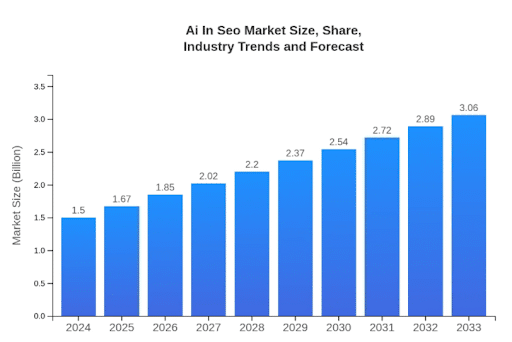
Source: Consainsights
Adoption is also accelerating. AI search tools now reach billions of users, and platforms like ChatGPT alone have hundreds of millions of active users weekly.
Key Differences Between AI SEO and Traditional SEO
Here’s the differences between AI SEO and traditional SEO.
Ranking vs Being Selected
Traditional SEO is about pushing your page higher in search results so users click and visit your website. Position matters a lot here. In AI SEO, ranking alone doesn’t guarantee visibility. AI tools scan multiple sources and pick specific parts of content to build an answer.
Even lower-ranked pages can get used if they explain something better. This means your focus shifts from just “being on top” to “being useful enough to be selected.”
Keywords vs Real Intent
Traditional SEO relies heavily on targeting exact keywords. You research phrases and try to match them closely in your content. AI SEO goes deeper. It looks at what the user is actually trying to solve.
For example, two queries might use different words but mean the same thing. Content that clearly solves the problem, explains it well, and stays focused on intent performs better than content built only around keyword placement.
Backlinks vs Overall Authority
Backlinks are important in traditional SEO because they signal trust and popularity. The more strong links you have, the better your chances of ranking.
In AI SEO, authority is judged more broadly. It includes mentions across websites, consistent information, and how often your brand appears in reliable sources. AI tools look for signals that show you are a trusted source overall, not just a site with strong backlinks.
Long Content vs Clear Content
Traditional SEO often encourages longer articles to cover more keywords and increase time on page. While depth still matters, AI SEO prefers content that is clear and easy to break down. Long content only works if it’s well-structured.
If your article has clear sections, direct answers, and simple explanations, it becomes easier for AI to extract useful parts. Clarity beats length when it comes to being selected.
Traffic vs Visibility
Traditional SEO focuses on getting clicks and bringing users to your website. Success is measured through traffic, rankings, and conversions. AI SEO changes that view. Your content can be seen and used without a click.
This builds awareness and trust even if the user never visits your page. It also means you need to think beyond traffic and focus on how your content influences what users see and believe.
Benefits of Traditional SEO
Traditional SEO is still one of the most reliable ways to bring steady traffic to your website. When your pages rank on search engines, you get visitors who are already searching for something specific. This makes the traffic more targeted and more likely to convert. It works especially well for product pages, service pages, and blogs that answer clear questions.
Another benefit is control. You can decide which keywords to target, how your pages are structured, and how you build authority over time. With the right strategy, SEO can bring consistent results for months or even years without paying for ads. Once a page ranks, it can continue bringing traffic with very little ongoing effort.
Traditional SEO also has a proven system. There are clear steps, tools, and methods that have worked for years. Businesses know what to do, how to measure success, and how to improve. This makes it easier to plan long-term and scale results with consistency.
Benefits of AI SEO
AI SEO helps you stay visible in a very different way. Instead of waiting for users to click your link, your content can be used directly inside AI-generated answers. This means your brand can reach users even if they never visit your website. It creates a new layer of exposure that didn’t exist before.
Another benefit is how well it matches user behavior today. People are asking questions in a natural way, and AI tools respond in the same way. If your content is written clearly and directly, it fits perfectly into this system. This increases your chances of being included in answers across AI platforms.
AI SEO also rewards clarity and usefulness. You don’t need complicated strategies or heavy optimization. If your content explains things well and solves real problems, it stands a strong chance of being picked. This shifts the focus from gaming rankings to simply being helpful, which creates better content overall.
What Works Best in 2026
The best approach right now is to use both traditional SEO and AI SEO together, instead of choosing one over the other. Each one covers a different part of how people search and consume information. If you ignore one, you leave gaps in your visibility.
Start with solid SEO basics. Build pages that are structured well, target real search queries, and load properly. This gives you a strong base on search engines. At the same time, write your content in a way that is easy to understand. Short sentences, clear headings, and direct answers help both users and AI systems quickly get what they need.
Focus on intent first. Before writing anything, understand what the person actually wants to know. If your content solves that clearly, it works across both systems. Avoid adding extra fluff or over-explaining simple points. The clearer your answer, the better it performs.
Also, think beyond just keywords. Use natural language and write the way people actually speak. This makes your content easier to pick up by AI tools while still performing well in traditional search.
Plus, build trust over time. Keep your content consistent, update important pages, and make sure your information is accurate. When your content stays useful and reliable, it continues to perform in both search engines and AI-driven results.
Conclusion
Search is no longer limited to ranking pages and hoping for clicks. People are getting answers faster, and the way content is used is changing. Traditional SEO still brings steady traffic, while AI SEO adds another layer where your content can be part of the answer itself. Both matter if you want consistent visibility.
So your focus should be on creating content that is clear, useful, and easy to understand. When your content solves a problem properly, it naturally works across both systems. Keep things simple, stay consistent, and make your content worth reading.
FAQs
1. What is the main difference between AI SEO and traditional SEO?
Traditional SEO focuses on ranking your website higher on search engines to get clicks and traffic. AI SEO focuses on getting your content used inside AI-generated answers. One is about visibility on a results page, while the other is about being part of the actual answer users see.
2. Can AI SEO replace traditional SEO?
AI SEO cannot fully replace traditional SEO. Both work differently and serve different purposes. Traditional SEO still brings direct traffic from search engines, while AI SEO helps you appear inside AI answers. The best results come from using both together instead of relying on just one approach.
3. Is keyword research important in AI SEO?
Yes. But it works differently. In traditional SEO, exact keywords matter more. In AI SEO, understanding the user’s intent matters more than repeating keywords. You should still use keywords, but focus on writing in a natural way that clearly answers the topic.
4. How do I optimize content for AI search?
Focus on clear writing, simple structure, and direct answers. Break content into sections, use headings, and avoid unnecessary complexity. Write in a way that is easy to read and understand. The easier your content is to process, the higher the chances it will be used in AI-generated answers.
5. What works best in 2026 for SEO?
The best approach is to combine both traditional SEO and AI SEO. Build content that ranks well and is also easy for AI to use. Focus on clarity, intent, and structure. When your content is useful and easy to understand, it performs better across search engines and AI platforms.