When people buy or sell property, they spend time researching before reaching out to an agent or real estate company. They read local guides, scan market articles, and notice which businesses are being mentioned across trusted websites.
These online mentions matter because they help shape trust. When a real estate business is referenced by relevant publications or industry resources, it becomes easier for buyers and sellers to feel confident about who they contact. This is where link building becomes important.
Link building helps real estate businesses show up in the right places while people are actively researching property decisions. It supports search visibility and strengthens credibility by associating your brand with reliable sources.
In this blog, we’ll share link building strategies for real estate that help attract genuine buyers and sellers and support long-term growth.
Why Real Estate Owners Should Invest in Link Building
Real estate is a research-heavy industry. Buyers and sellers rarely make quick decisions. They spend weeks, sometimes months, reading articles, comparing agents, and trying to understand the market before reaching out. Because of this, being visible only on your own website is not enough.
Link building helps real estate owners show up where people are already looking for information. When your business is mentioned on local publications, housing blogs, market reports, or industry resources, it increases both visibility and trust. These mentions act as external confirmation that your business is established and credible.
Trust is especially important in real estate because transactions involve large financial and legal commitments. Buyers want reassurance before they reach out, and most of that reassurance now comes from online research. A survey shows that almost 100% home buyers use the internet at some point during their home search.
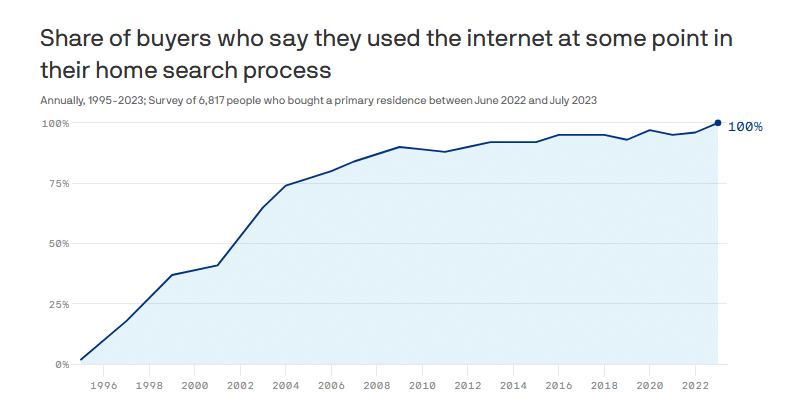
Image Source: Axios
So when your brand appears in those trusted places, it increases familiarity and confidence, which makes you more likely to be considered early in the buying or selling process.
Link building also supports long-term search performance. Google uses links as a ranking signal to understand which websites are authoritative.
#1. Create Link-Worthy “Skyscraper” Content
For real estate, link-worthy content means creating something people genuinely find useful enough to reference. This usually comes in the form of detailed guides, local market breakdowns, pricing comparisons, or step-by-step explanations buyers and sellers search for but struggle to find in one place.
The idea behind skyscraper content is simple. Look at what already ranks or gets links in your niche, then create a better version. That could mean updating outdated information, adding clearer explanations, using real data, or making the content easier to understand for everyday readers.
In real estate, good examples include guides like “Cost of Buying a Home in [City],” “Selling a Property: Fees, Taxes, and Timelines Explained,” or “Rental Yield and ROI by Area.” These topics attract links because journalists, bloggers, and local sites often need reliable resources to reference.
Once the content is published, outreach matters. Find websites that already link to similar guides or outdated articles. Reach out and let them know you’ve created a more complete and up-to-date resource.
#2. Use HARO, Qwoted, and Digital PR to Earn Editorial Links
HARO and Qwoted help real estate businesses get mentioned in real articles written by journalists. These platforms are not about placing links. They are about sharing useful insights so your business gets picked up naturally by trusted publications.
Journalists use these platforms when they need expert opinions on housing markets, pricing trends, buyer behavior, or local property activity. When you respond with clear and helpful answers, your name and website may be included in the article.
This works well because editorial links are trusted. They come from real media sites, not blogs created just for SEO. Industry surveys show that Digital PR is the most commonly used and most effective link building method, used more than guest posting, directories, or link exchanges.
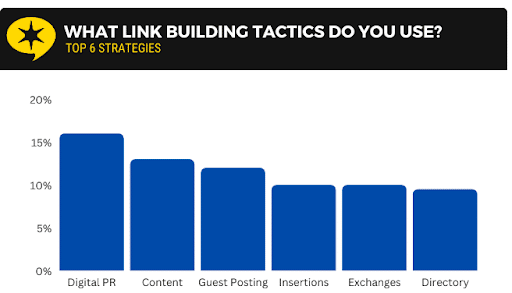
Image Source: Blogging Wizard
This is why editorial links carry so much weight.
For real estate owners, these links do more than help with rankings. They help build credibility. When buyers or sellers see your name quoted in an article, it makes your business feel more established and reliable. It also puts you in front of people who are already researching property decisions.
#3: Guest Blogging with a Purpose
Guest blogging works best in real estate when it is done with intention. Writing for any website that accepts submissions is rarely effective. The focus should be on relevant platforms that your buyers or sellers already read.
Good guest posting opportunities include local business blogs, housing and property websites, relocation resources, mortgage or finance blogs, and regional news sites. These platforms often welcome expert insights, especially when the content helps their audience understand the market better.
The key is to lead with value, not links. Instead of writing promotional content, focus on sharing practical advice. Topics like market trends, buyer mistakes, neighborhood insights, or investment considerations perform well because they educate without selling.
A single strong guest post on a respected site can be more valuable than multiple low-quality placements. It positions you as a knowledgeable voice and places your brand in front of an audience already interested in property decisions.
#4. Broken Link Building
Broken link building is a practical way to earn links while helping other website owners fix issues on their sites. The idea is to find broken links related to real estate topics and suggest your content as a replacement.
Many real estate blogs, housing guides, and local resource pages link to articles that no longer exist. These broken links create a poor user experience, and most site owners are open to fixing them when notified.
Start by finding pages that cover topics similar to your content, such as buyer guides, market insights, or real estate resources. Use SEO tools or browser extensions to identify broken outbound links on those pages. Once you find a relevant broken link, check what the original page was about.
If you already have content that covers the same topic, reach out to the site owner. Let them know about the broken link and suggest your page as a replacement. Keep the message short and helpful. The goal is to solve a problem, not push a link.
This strategy works well in real estate because informational content tends to age quickly. Laws change, markets shift, and old pages get removed. By offering updated and relevant content, you increase your chances of earning links that are both useful and long-lasting.
#5. Turn Unlinked Brand Mentions into Links
Many real estate businesses are already being mentioned online without realizing it. These mentions might appear in local news articles, blog posts, market roundups, or partner websites where your business name is referenced but not linked.
Turning these unlinked mentions into links is one of the easiest link building strategies because the hard part is already done. The website already knows who you are and found your business worth mentioning. All that’s missing is a clickable link.
Start by tracking brand mentions using tools like Google Alerts, SEMrush, or Ahrefs. Look for instances where your business name, agent name, or brokerage is mentioned without a hyperlink. Once identified, reach out politely to the site owner or editor.
Keep the outreach simple. Thank them for the mention and ask if they can add a link so readers can easily find more information. In most cases, the request is accepted because it improves the experience for their audience.
Wrap Up
When we talk about link building for real estate, there are lots of benefits we can see. It helps improve visibility, builds trust, and brings buyers and sellers who are already researching the market. But these benefits only come when link building is done with the right approach.
By using the strategies above, you can earn links that deliver the benefits we’ve discussed. If you don’t have the time or expertise to secure links using these methods, reach out today. We’ll help you get links from top media sites like Forbes, American Express, Business Insider, and more.
FAQs
1. How long does link building for real estate take to show results?
Link building is a long-term effort. Some improvements in visibility can appear within a few weeks, but meaningful results usually take a few months. The impact grows over time as your site earns more trusted links.
2. Are local links more important than high-authority links in real estate?
Both matter. Local links help you rank and build trust in specific areas, while high-authority links strengthen overall credibility. A balanced mix works best for real estate businesses.
3. Can link building help generate real buyer and seller leads?
Yes, when done correctly. Links from relevant websites bring visitors who are already researching property, which often leads to higher-quality inquiries.
4. Is link building safe for real estate websites?
Link building is safe when links are earned naturally through quality content, partnerships, and media coverage. Avoid paid or spammy links, as they can harm your site.
5. Do real estate agents need ongoing link building?
Yes. Real estate markets are competitive, and websites constantly change. Ongoing link building helps maintain visibility, trust, and consistent lead flow over time.