
Most law firms try a few personal injury lawyer marketing ideas, see mixed results, then jump to the next thing. Ads get turned on and off. Content gets published and forgotten. Agencies promise growth, then disappear once the contract ends. Over time, this creates a cycle where marketing feels expensive, unpredictable, and hard to trust.
Long term firm growth works differently. It comes from marketing decisions that keep paying off months and years later, even when ad budgets slow down or competition increases.
This guide will help you find personal injury lawyer marketing ideas that support long term growth instead of short bursts of leads.
So let’s get started.
#1. Build a High-Trust Local SEO Presence
The most important foundation for long-term growth is making sure your firm shows up when people in your area are actively looking for help. Search behavior makes this clear. Around 46% of all Google searches have local intent, meaning people are actively looking for nearby services rather than browsing casually.
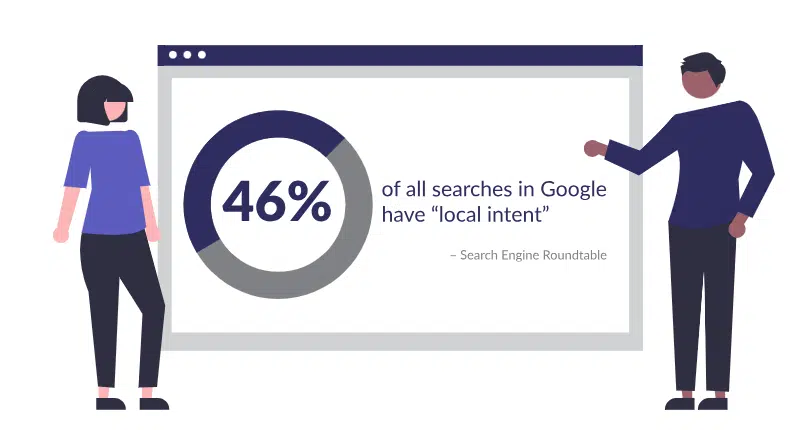
Image Source: Cube Creative Design
Even 75% of users never scroll past the first page of search results, which means visibility at the top directly controls who gets attention and who gets ignored.
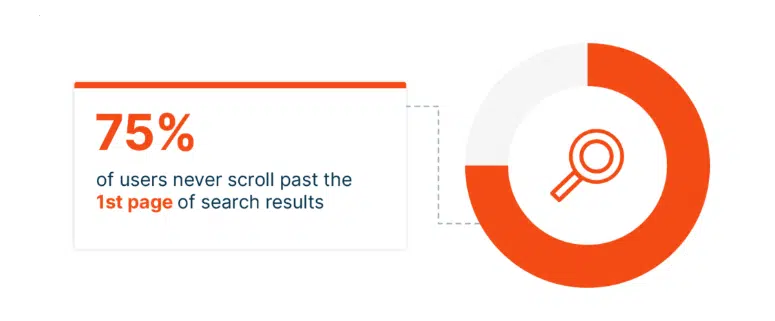
Image Source: ActualTech Media
This is why local SEO compounds over time. A strong presence in maps, local listings, and location based pages keeps bringing in traffic without constant spending. Each review, citation, and optimized page strengthens visibility further. Unlike short-term campaigns, local SEO keeps working quietly in the background, helping the right people find your firm at the moment they are ready to take action.
#2. Invest in Authority-Building PR and Media Mentions
Many law firms focus only on direct advertising or search rankings, but there’s another long-term growth driver that doesn’t get enough attention — authority and visibility outside your own channels. When local news outlets, industry blogs, business publications, or community websites mention your firm or quote you as an expert, it does two important things.
First, it increases familiarity. People tend to trust brands they’ve seen in credible places. Even a small mention in a respected local newspaper can make your firm feel more established and trustworthy to potential clients, especially when those mentions come through consistent media outreach and Qwoted link building efforts.
Second, these mentions often include links back to your website. That improves your overall SEO strength because search engines see links from established sites as a sign that your firm matters.
Authority-building involves developing relationships with journalists, offering insights on relevant legal topics, and sometimes creating newsworthy content — like commentary on recent legal changes, public safety issues, or trends in injury cases. If your firm comments on a new traffic law or explains how a recent court decision affects local claimants, that becomes a resource journalists can reference.
#3. Develop Strong Referral Relationships Outside the Legal Space
Growth that lasts in personal injury lawyer marketing doesn’t come from doing the same thing as every other firm. It comes from building networks that bring consistent referrals from trusted sources. One of the most effective ways to do this is by forming relationships with professionals who interact with injured people before they ever think about contacting a lawyer.
This includes medical providers like chiropractors, physical therapists, and urgent care clinics. It also includes auto repair shops, towing services, therapists, social workers, and even local police or safety organizations. These professionals often speak with injured people in the weeks after an accident — a time when someone may still be unsure about legal help. A simple referral or brochure from someone they already trust can change who they call first.
Referral relationships should be built on genuine value, not just giveaways or incentives. Offer educational materials, host joint community safety sessions, or provide expert insights that help those professionals support their clients better. Clinics may appreciate content you produce that explains when to see a legal professional, and auto shops may want guidance to share about documentation after a crash.
#4. Create Educational Content Around Real Injury Questions
When someone is hurt or dealing with a legal injury issue, they often don’t know what to do first. They might search for answers like “What to do after a car accident?” or “How long does a personal injury case take?” Creating content that answers these exact questions builds trust and positions your firm as a source of real help, not just a service provider.
Educational content needs to be clear, practical, and focused on the situations potential clients are actually facing. A blog post, a short FAQ page, or a simple video that breaks down a complex legal concept in everyday language can offer real value. Many law firms find that content like this attracts visitors who spend more time on their site and are more likely to contact the firm.
Most people research online before picking up the phone. Research shows that 96% of people seeking legal guidance turn to search engines first, while 88% of law firms rely on blog content to attract and develop clients.
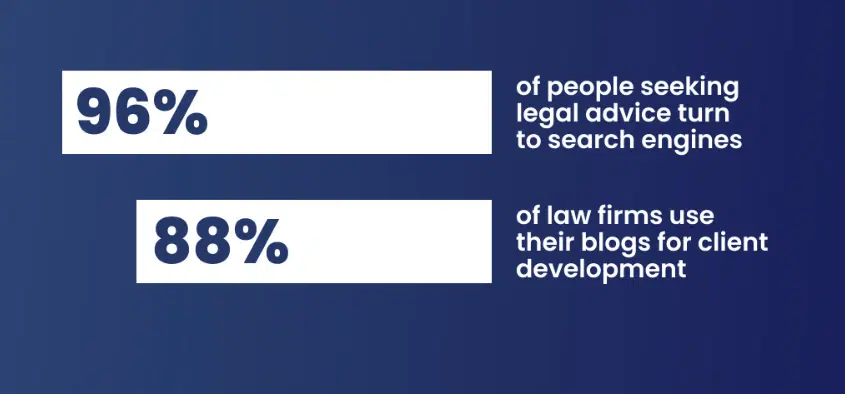
Image Source: Grow Law
This explains why educational content plays such a strong role in the decision-making process. People read, compare, and look for clarity before reaching out, and firms that consistently publish helpful information are far more likely to earn that first call.
Your content becomes a way to guide someone from confusion to clarity. If your firm’s content helps them understand their options, clients are far more likely to choose you over a firm that only advertises services without offering insight.
As you build a library of useful content over time, you also create more pages that can rank in search engines. That means every new piece of helpful material becomes a long-term asset that can continue bringing in inquiries months or years after publication.
#5. Use Case-Based Storytelling Instead of Generic Legal Messaging
Most personal injury lawyer marketing sounds like a list of services and guarantees. That approach fails because injured individuals are not comparing features like insurance coverage or office hours. They want to see people like them in situations like theirs, and evidence that a firm understands the emotional and legal journey ahead.
Case-based storytelling does just that. This means sharing anonymized real-world stories about how your firm helped someone navigate a difficult injury case, what challenges came up, how the process unfolded, and what the outcome meant for that person’s life. These stories work because they show empathy and understanding, not just legal capability.
Effective storytelling focuses on context, clarity, and honesty. It avoids jargon and speaks in human terms. Prospective clients who read or watch these stories can picture themselves in them. They begin to understand that your firm knows the steps, the hurdles, and the real questions injured people care about.
#6. Improve Website Conversion for Injury-Specific Intent
Driving traffic is just the first step. The second, and equally important, step is converting that traffic into meaningful leads. Many law firm websites receive visitors but fail to guide them toward contacting the firm effectively. That’s often because the site is designed like a brochure instead of a journey.
Conversion optimization means understanding what visitors are looking for and making it as simple as possible for them to take the next step. This includes having clear contact options on every page, persuasive but honest calls to action, intuitive navigation, and content that speaks directly to the visitor’s situation.
For personal injury lawyer marketing, this often means building pages focused on specific intent — such as “truck accident injury help” or “slip and fall compensation guide” — instead of general practice pages.
Here are the practical elements include:
- Prominent phone numbers and click-to-call buttons
- Simple contact forms asking only essential information
- Live chat or quick-response messaging options
- Micro-copy that reassures visitors (e.g., “No fees unless we win”)
Regular testing — such as changing button text, simplifying forms, or reorganizing landing pages — also plays a role. With each improvement, more of your existing traffic becomes real inquiries, which strengthens long-term growth without needing constant traffic increases.
#7. Build Long-Term Value Through Email and Follow-Up Content
Many personal injury firms stop communicating once a case ends or a lead goes quiet. That leaves long-term value on the table. Email and follow-up content help your firm stay present in a way that feels helpful rather than promotional.
Past clients, unconverted leads, and referral contacts already know your name. Staying in touch through occasional emails keeps your firm familiar and top of mind. This can include updates on personal injury laws, safety reminders, settlement process explanations, or guidance on what to do after different types of accidents. The goal is usefulness.
Email also supports referrals. A past client who receives helpful information months later is more likely to recommend your firm when someone they know gets injured. Consistency matters more than frequency. One thoughtful email every month or two builds far more trust than aggressive weekly campaigns.
#8. Create Local Community Presence Beyond Advertising
Long-term growth in personal injury lawyer marketing often comes from being known locally. Community presence builds recognition in ways ads never can. When people see your firm involved in real local efforts, trust grows organically.
This can include sponsoring safety awareness events, supporting local charities, participating in school programs, or contributing to road safety campaigns. These activities put your firm in front of people without the pressure of a sales message. They also align naturally with personal injury law, which centers on safety and recovery.
Community involvement also creates opportunities for local press coverage, social media content, and partnerships. A simple photo from a community event or a short recap of a safety workshop can reinforce credibility and visibility.
#9. Track Lead Quality Instead of Just Lead Volume
Not all leads are equal, yet many firms judge marketing success only by the number of calls or form submissions. Long-term growth depends on focusing on lead quality instead of raw volume.
High-quality leads are those that match your ideal case profile. They involve the right injury types, serious claims, and clients who are ready to move forward. Tracking where these leads come from helps you invest more in what actually grows the firm.
This means reviewing intake data regularly. Look at which channels produce signed cases, not just inquiries. A source that delivers fewer leads may outperform another if those leads turn into real cases.
When marketing decisions are tied to actual case outcomes, wasted spend drops. Over time, this clarity allows your firm to refine strategy with confidence and build a predictable growth path instead of chasing numbers that look good on paper.
10. Consistently Refine Marketing Based on Case Outcomes
Personal injury lawyer marketing evolves with real data. Instead of guessing what works, successful firms study outcomes and make adjustments based on actual results.
This includes reviewing which practice pages lead to consultations, which content brings qualified calls, and which campaigns result in signed cases. Small changes made consistently can create large improvements over time.
Refinement means making thoughtful updates, testing new approaches carefully, and keeping what proves effective. When marketing aligns with real-world intake and case performance, growth becomes more stable.
Wrapping Up
Long term personal injury lawyer marketing works best when it is built on consistency and trust rather than quick wins. Showing up in local search, answering real questions, and staying visible in the right places helps attract better cases over time. When these efforts are tracked and refined based on real outcomes, growth becomes more stable and predictable.
If you need help building high quality links, earning real media mentions, or strengthening your law firm’s authority, just reach out here. We’ll help you get links that increase your authority.
FAQs
How long does personal injury lawyer marketing take to show results?
Long-term personal injury marketing usually takes a few months to gain traction. Local SEO, content, and link building build gradually. Early improvements often appear within three to four months, while stronger and more stable results develop over six to twelve months as trust and visibility grow.
Which marketing channel works best for personal injury law firms?
No single channel works on its own. Firms that grow consistently usually combine local SEO, helpful content, strong backlinks, and referral efforts. This mix attracts better-quality leads and reduces reliance on one source, making growth more stable when competition or ad costs increase.
Is local SEO really necessary for personal injury lawyer marketing?
Local SEO is critical because most people look for legal help near them. Strong local listings, reviews, and location pages help your firm appear when someone searches with urgency. This visibility often brings higher-intent leads compared to broad or generic marketing efforts.
How do backlinks help personal injury lawyer marketing?
Backlinks act as trust signals for search engines. When credible websites link to your firm, it improves rankings and authority. Strong backlinks also help content and local pages perform better, which make all SEO efforts more effective over time.
What should be tracked to measure marketing success?
The most important metrics are signed cases, lead quality, and conversion paths. Tracking where strong cases come from helps you invest in the right channels and avoid wasting budget on traffic or calls that rarely turn into real clients.