Most link building campaigns don’t fail because the team stopped trying. They fail because the effort goes into tactics Google stopped rewarding years ago.
You send outreach, you get placements, the link count grows, and rankings stay flat. Or worse, they drop. When that happens, the problem is almost never the volume of work. It’s one of a handful of link building mistakes that show up in nearly every struggling campaign.
This guide walks through the seven mistakes we see most often, why each one hurts you, and what the fix looks like in practice.
1. Chasing Link Quantity Over Relevance
The web is far less linked than most people assume. An Ahrefs analysis of over one billion pages found that 96.55% of them get zero traffic from Google, and a huge share of those pages have no backlinks at all.
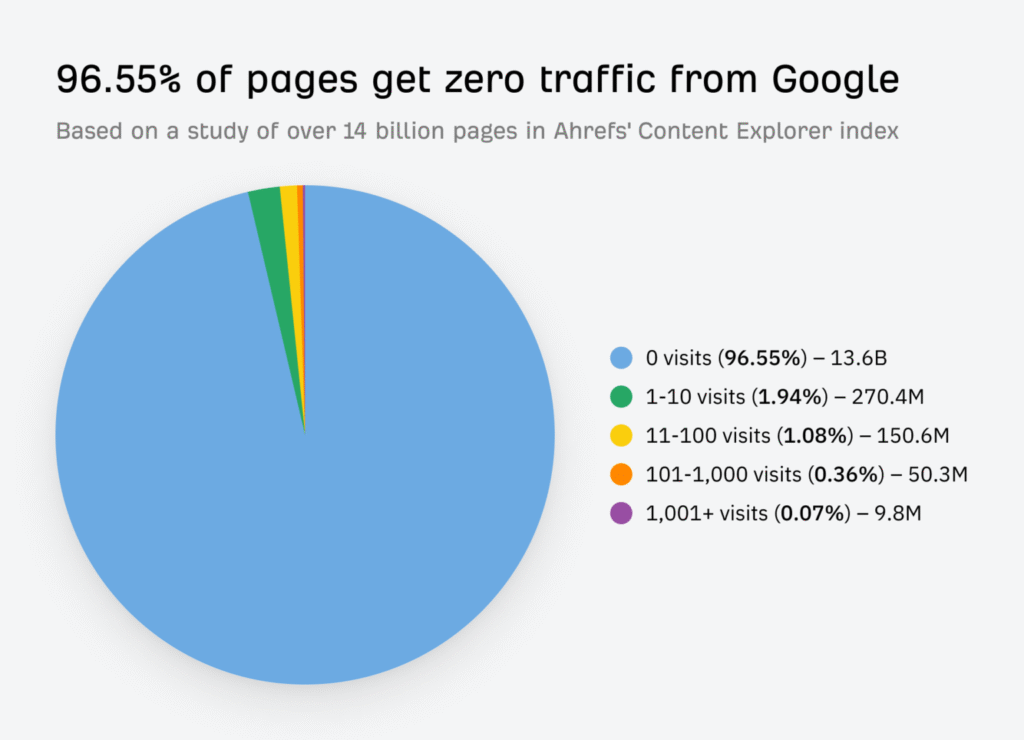
Image Source: Ahrefs
So the bar for having “some links” is low, and clearing it means very little.
What separates ranking pages from invisible ones isn’t the raw number. It’s whether the links come from sites Google associates with your topic. Twenty links from random blogs in unrelated niches pass less trust than three links from publications your industry actually reads.
The mistake usually starts with reporting. When the monthly report celebrates “47 new links,” the team starts buying whatever is cheapest to acquire. Relevance becomes an afterthought, and Google’s systems, which evaluate the linking page’s topic and audience, discount most of what you built.
The fix is to change what you count. Track links from sites in your niche with real organic traffic, and treat everything else as noise.
2. Buying Links From Networks and Farms
Private blog networks and bulk link marketplaces still exist because they still find buyers. The sites look real at a glance: decent design, regular posts, a respectable-looking domain rating.
Look closer and the pattern gives them away. The blog covers finance, pet care, casinos, and CBD in the same week. Every post exists to hold a paid link. Organic traffic is near zero because Google already stopped trusting the domain. And that’s one of the biggest link building mistakes.
The danger isn’t only that these links pass no value. It’s that they leave a footprint. When dozens of sites share hosting patterns, similar templates, and outbound links to the same paying customers, Google can devalue the entire network at once. Sites that leaned on those links lose whatever rankings the links were propping up, often overnight, with no warning in Search Console.
If your budget is limited, earned placements beat purchased ones every time. Methods like HARO link building cost time instead of money and produce links Google has no reason to discount.
3. Over-Optimizing Your Anchor Text
This is the link building mistake that turns a mediocre link profile into a penalized one. When you control the anchor, the temptation is to use your money keyword every time. Do that across enough links and your profile develops a pattern no natural site ever has.
Real websites link with your brand name, your URL, your page title, or a phrase that fits their sentence. Exact keyword anchors are rare in the wild. When 30% or 40% of your anchors repeat the same commercial phrase, Google reads it as a paid pattern, because that’s exactly what it is.
Keep exact-match anchors as a small slice of your profile and let branded and natural anchors dominate. If a placement lets you choose the anchor, choose the one a real editor would have written.
4. Building Links to Pages That Give No Reason to Link
This is the link building mistake nobody talks about, because it happens before the campaign even starts. A lot of outreach fails before the first email is sent, because the page being pitched has nothing worth referencing. A thin service page or a rewritten listicle gives an editor no reason to say yes, and no amount of outreach volume fixes that.
The numbers back this up. Backlinko analyzed 12 million outreach emails and found the average campaign gets a reply rate of just 8.5%, and that figure includes rejections.
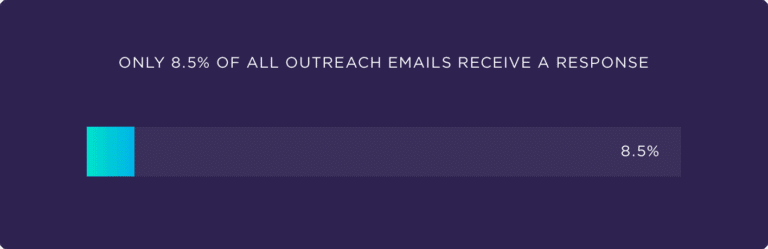
Source: Backlinko
Actual placements sit well below it. Editors ignore most pitches because most pitches ask for a favor instead of offering something useful.
The campaigns that beat those averages almost always pitch an asset: original data, a study, a genuinely deeper guide, a free tool. When the page itself gives editors something their readers gain from, the outreach becomes an offer instead of a request.
Before your next campaign, look at the target page and ask one question: if a stranger ran this site, would they link to this? If the honest answer is no, fix the page before writing a single email.
5. Sending the Same Template to Everyone
Mass outreach with a swapped-in first name is the most common link building mistake in the industry, and editors can spot it from the subject line. They receive dozens of near-identical pitches every morning. Yours joins the pile.
Personalization only works when it proves relevance. Mentioning someone’s latest article means nothing if your pitch doesn’t belong on their site. What changes outcomes is showing, in the first two lines, that you understand what they publish and why your content fits their readers.
That takes research time, which means fewer emails per day. That trade is worth making. Ten researched pitches to the right editors outperform two hundred templated ones, and they don’t burn your domain’s sender reputation in the process.
6. Ignoring the Links You Already Have
Most teams focus entirely on acquiring new links and never look at the profile they’ve already built. Links decay, linking sites get sold and repurposed, and old paid links from a previous agency can sit in your profile for years. A periodic review of the backlinks pointing to your site catches these problems while they’re still cheap to fix.
Of all the link building mistakes on this list, this one is the easiest to fix. Check your profile at least twice a year. Look at anchor distribution, at referring domains that lost their traffic, and at links from sites that have nothing to do with your industry. You’re looking for patterns, because Google evaluates patterns.
Be careful with the disavow tool, though. Panic-disavowing every low-quality link often removes links that were passing value. Reserve it for links that are clearly manipulative, and let Google ignore the rest, which it largely does on its own.
7. Expecting Links Alone to Fix Rankings
Links amplify a page. They don’t rescue one. Backlinko’s study of 11.8 million search results found the #1 result has 3.8 times more backlinks than positions 2 through 10, and that correlation convinces many teams that links are the whole game.
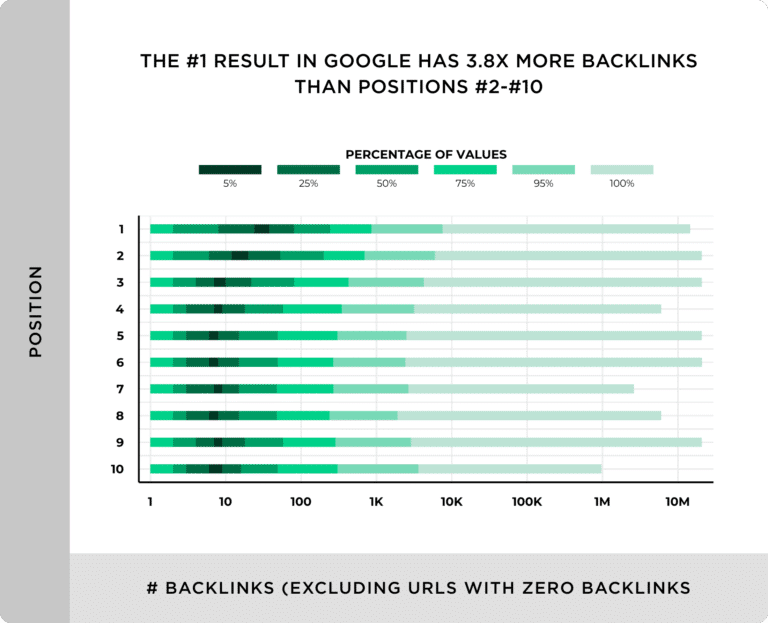
Source: Backlinko
They aren’t. The pages winning those links also match search intent, load fast, and answer the query better than the competition.
We regularly see sites pour budget into links for pages that fundamentally don’t deserve to rank… wrong content type for the query, outdated information, poor experience. The links get built, nothing moves, and link building takes the blame.
Treat links as one input in a system.
Final Thoughts
Look back at these seven link building mistakes and one root cause connects them all — treating links as a commodity to accumulate instead of recognition to earn. Every shortcut on that list, bought networks, keyword anchors, template blasts, exists to fake the appearance of recognition without the substance.
Google has spent two decades getting better at telling the difference. So the safest strategy is also the most effective one… build pages worth referencing, put them in front of the right editors, and let the profile grow the way a trusted site’s profile naturally does. Slower, yes. But it compounds instead of collapsing.
FAQs
1. How many backlinks do I need to rank?
There’s no fixed number, because it depends on what the top-ranking pages for your keyword have. Study the current top 10, look at their referring domains from relevant sites, and use that as your benchmark. In low-competition niches, a handful of relevant links can be enough. In competitive ones, you may need dozens over time.
2. Are paid links always against Google’s guidelines?
Links bought to pass ranking value violate Google’s spam policies unless they carry a sponsored or nofollow attribute. Paid links that are properly tagged are fine but pass no ranking value. The risk comes from undisclosed paid links at scale, especially from networks with obvious footprints. This also considered one of the major link building mistakes.
3. How long does it take for new backlinks to affect rankings?
Typically anywhere from a few weeks to a few months. Google has to recrawl the linking page, evaluate the link, and recalculate signals. Links from frequently crawled, high-traffic sites tend to get counted faster than links from small blogs that Google visits rarely.
4. Should I disavow bad links from an old agency?
Only if the links are clearly manipulative, like obvious PBN placements or spammy directories built at scale. Google ignores most low-quality links automatically. Disavow files built in a panic often do more harm than the links themselves, so audit carefully before submitting anything.
5. What’s the safest link building strategy right now?
Earning editorial links through digital PR, expert commentary, and original content. When a journalist or editor chooses to link to you, the placement, anchor, and context all look natural, because they are. That’s the one category of links no algorithm update has ever punished.